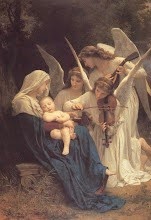
Language is the collection of symbols and sounds used to convey meaning from person to person, whether it be written or spoken. English, Hebrew, Japanese, and all such linguistic codes are one kind of language, a language of cultures, but there are other, more subtle uses of language. Calculus is a language, using the complexity of numerals, integrals and differential equations to convey the concepts of fractals, imaginary numbers, and the splendor of the Mandlebrot set. Art is a language, and perhaps one of the most controversial, speaking across political and social boundaries. Likewise, music is a language, a language of notes, phrases, beauty and silence, which conveys messages, stories, and knowledge. Music is a powerful language and the most profound of all musical dialects is the singing gesture, in which the human body is the instrument. Vocal music is the language of the unbiased soul in the body, the expression of the self as an instrument of beauty. When one sings, it is the heart and the mind, not the society, not politics nor religion, gender or race which phonates the air and spins the currents of sound to reach far off and distant ears, to touch hearts and move minds. Peoples of completely different backgrounds, ethnic boundaries and cultures may be bound together in the magic of O la che buon Echo, or swept together in the sorrow exuding from Bach's Cantata 106. The pure grandeur of Beethoven's Choral Fantasia elevates all to new heights of majesty, while the simplicity of Gregorian chant has served for thousands of years as a bridge to the divine. The Ragas of India serve in like manner for all its many cultures, whether Sikh, Muslim, or Hindu, as prayers of beauty and encompassing truth. Thus, it is that the language of vocal music crosses the boundaries between peoples of different ethnicities. Vocal music can create a shared experience among persons by nature of the universality of its emotive prowess, such as in Nobuo Uematsu's The Promised Land. Vocal music can also cross ethnic lines by nature of its commonality, such as in folk or popular songs. Lastly, vocal music can bring differing ethnicities together through the power of assembly in the form of a choir.
Music has been an integral expression of man's nature since ancient times. Indeed, one source claims that “In all probability, man was gifted primevally and throughout an endless span of time with a singing voice which he possessed long before he was able to speak” (Husler 214). Singing, therefore, is a natural and integral form of human communication. Vocal music crosses the boundaries between peoples of different ethnicities by nature of it's emotive prowess, tapping into the complex emotional subconscious of both singer and listener. What music communicates between persons delves deep into the secret resources of the heart and conveys intimate feelings and ideas of such concepts as life, death, love, and beauty. A Requiem is a mass for the dead, a treatise to the awe and fear man has held for death over the centuries. It is a shared fear or the unknown, a common fact that man must die, no matter who or what he is. Bach's Cantata 106, a requiem cantata, gravely states “Es ist die alte Bund, Mensch, du must sterben.” It is the Fate of everything, man you must die! How sharply this contrasts to the In Paradisum, the seventh movement of the Faure Requiem. The listener is raised to new heights of hope with the soaring, angelic soprano line, and one cannot cling to the hope of eternal life. All men and women must interract with the questions which good music confront them with as universal dilemas of life, death, sin and redemption, regardless of age, sex, or race.Music demands of man his subjectivity, sweeping him along into realms of feeling inside his person that he cannot escape. Vocal music connects with man on an intimate level, even moreso then instrumental music can because of the integral nature of the vocal mechanism to the person. The very human body is the instrument which creates beauty in this situation, and thus it is the human person, body as well as soul, which is active in the creation of Beauty. When one listens to a vocal performance, whether in a concert hall or in a church, they are sharing an experience with every person in that concert hall. Every performer and every listener is swept together in the intricate, emotive harmonies of Whitacre, the splendorous magnitude of Wagner's Der Ring des Nibelungen, or brought to tears of mourning at the tender, heart-broken conclusion of David's Lamentation. Through the common experience of emotion in great works of beauty, vocal music tears down walls between individuals, stripping the heart bare in the seizure of objectivity. Person to person, the human soul is all that is left once creed, dress, culture and background have been washed away in the rush of emotion which vocal music demands of its listeners. The emotional prowess of vocal music creates a common experience for all who listen and thus, the language of vocal music crosses the boundaries between peoples of differing ethnicities.
The foundations of high culture rest on the cultivation of the aesthetic, a vital part of which is the growth and cultivation of music. Indeed, no culture would be complete without musical identity and every people, race and nationality expresses their unique characteristics through music.Vocal music, being the simplist form of musical expression for humans, has had a leading role in captivating the sensibilities of cultures around the world. Thus vocal music dispells racial boundaries by nature of its commonality in culture.Der Erlkönig by Schubert is a prime example of the German aesthetic. It conveys not only the terror that one feels at the approach of Der Erlkönig, or Death, for the little boy, but also the German romantic sensibilities and nationalistic poetry, in this case Goethe. Through der Erlkönig, a piece of Germany is presented for those who wish to listen and hear the sounds of pounding hooves and terrified cries, the passion of German Romanticism.Likewise, the music of A. R. Rahman convays beautifly the voice of the Indian people. In his vocal pieces, one can smell the spices on the air, see the lush green of the Indian forests or the barrenness of the Indian deserts, and drift within the swirling, smoky tendrils of the sensuous musical lines of the singers. The folk music of country villages and the pop songs of modern metropolises also tell the story of the peoples who sing them. The songs of peoples are a voice crying out for those who would stop and listen, hearing the thoughts and hearts of a race in the gentle, angry, sorrowful or joyful swell of sound. Vocal music is a window into the hearts of nations and cultures across the globe, and thus, a method of communication between peoples of different ethnicities or racial backgrounds. Vocal music crosses bariars wetween peoples of different ethnicities due to the intimate position it holds in cultural identity across space and time.
The concept of man as an image of the Living God does not leave the expression of the aesthetic to the individual, but demands more. Just as God exists in an eternal community of three persons, thus, to be a true expression of the goal of human existence, singing must be a communial expression. Choirs are the collaborative efforts of individuals working together as one voice, creating a community between the individuals, but also between all the cultures of the individuals in the choir. Vocal music brings different ethnicities together through the power of assembly, in which all different backgrounds and cultures must come together and make music. The Agape Choir is one such example. Consisting of men and women from all different races and backgrounds, their mission is to spread the message of peace to all races and countries. Their brightly colored costumes and expressive performance style convey their philosophy that all colors and shapes, all men and women, no matter where one comes from singing brings people together in the creation of beauty. In like manner, choirs can also serve as a method for spreading understanding and peaceful intentions across races. One such example is a youth chorale in Lebannon. The choir was made up of both Jewish and Muslim boys, who through their communal offering of beauty were able to make peace between their warring parents. Likewise, many cultural festivals feature choirs from across the globe, as in the Cantus festivel, held in Salzburg, Austria. The David Jorlett Choralle from America, the St. Peter's Preperatory Orchestra from Australia, the Naple's Civic Orchestra from Italy, and the Verrinshav Folk choir from Latvia all lent their instruments and voices with one accord to aid Armenia orphans. Due to the communal efforts of all the choirs and orchestras, the assembly was able to offer medical and educational supplies to impoverished children. Not only did four cultures come together to offer a common sacrifice of song, but they were able to cross another ocean, and touch the lives of the youth of a fifth race. In this way, vocal music has the ability to transcend cultural barriers through the formation of choral groups.
The human person is an entity continuously seeking to know and to make itself known, and the expression of this desire is language. Vocal music is a language which conveys the secrets of the human person in a unique and stunning way, for music takes part intimately in the expression of beauty of the natural world, and the music of the human person is the singing gesture. Because vocal music is common to all peoples, the language of vocal music destroys barriers between peoples of different ethnicities, cultures and races. Singing creates bridges between ethnicities by nature of its emotive prowess and ability to connect intimately with the individual, bonding person to person. Vocal music also destroys ethnic boundaries through the expression of cultural identities, which bring together races which would naturally be far removed from each other. Lastly, vocal music crosses barriers between races through the collaborative efforts of choirs. As a young girl once said: “you're never really a whole person if you remain silent, because there's always that one little piece inside you that wants to be spoken out”(Lorde 80). Music is a part of the human person, a part that their very bodies were meant to play and that their souls quietly yearn for. If each person does not let out that part of themselves, they are keeping bound a bird inside their hearts. However beautiful or large the cage, the hidden bird who has never seen the sun or felt the rain, never twittered its own melody, will grow gray, once bright feathers molting and shedding to litter the floor of the human heart. Singing must be a part of human interaction, for without it, an integral part of human expression is cut off. We must not be birds in cages. Humans must soar free in uncontained skies, with a song in their breast.
Wednesday, April 21, 2010


Tuesday, April 20, 2010
Poem of the day
A thing of Beauty is a Joy forever
-John Keats
A thing of beauty is a joy for ever:
Its loveliness increases; it will never
Pass into nothingness; but still will keep
A bower quiet for us, and a sleep
Full of sweet dreams, and health, and quiet breathing.
Therefore, on every morrow, are we wreathing
A flowery band to bind us to the earth,
Spite of despondence, of the inhuman dearth
Of noble natures, of the gloomy days,
Of all the unhealthy and o'er-darkened ways
Made for our searching: yes, in spite of all,
Some shape of beauty moves away the pall
From our dark spirits. Such the sun, the moon,
Trees old, and young, sprouting a shady boon
For simple sheep; and such are daffodils
With the green world they live in; and clear rills
That for themselves a cooling covert make
'Gainst the hot season; the mid-forest brake,
Rich with a sprinkling of fair musk-rose blooms:
And such too is the grandeur of the dooms
We have imagined for the mighty dead;
All lovely tales that we have heard or read:
An endless fountain of immortal drink,
Pouring unto us from the heaven's brink.
Nor do we merely feel these essences
For one short hour; no, even as the trees
That whisper round a temple become soon
Dear as the temple's self, so does the moon,
The passion poesy, glories infinite,
Haunt us till they become a cheering light
Unto our souls, and bound to us so fast
That, whether there be shine or gloom o'ercast,
They always must be with us, or we die.
Therefore, 'tis with full happiness that I
Will trace the story of Endymion.
The very music of the name has gone
Into my being, and each pleasant scene
Is growing fresh before me as the green
Of our own valleys: so I will begin
Now while I cannot hear the city's din;
Now while the early budders are just new,
And run in mazes of the youngest hue
About old forests; while the willow trails
Its delicate amber; and the dairy pails
Bring home increase of milk. And, as the year
Grows lush in juicy stalks, I'll smoothly steer
My little boat, for many quiet hours,
With streams that deepen freshly into bowers.
Many and many a verse I hope to write,
Before the daisies, vermeil rimmed and white,
Hide in deep herbage; and ere yet the bees
Hum about globes of clover and sweet peas,
I must be near the middle of my story.
O may no wintry season, bare and hoary,
See it half finished: but let Autumn bold,
With universal tinge of sober gold,
Be all about me when I make an end!
And now at once, adventuresome, I send
My herald thought into a wilderness:
There let its trumpet blow, and quickly dress
My uncertain path with green, that I may speed
Easily onward, thorough flowers and weed.
-John Keats
A thing of beauty is a joy for ever:
Its loveliness increases; it will never
Pass into nothingness; but still will keep
A bower quiet for us, and a sleep
Full of sweet dreams, and health, and quiet breathing.
Therefore, on every morrow, are we wreathing
A flowery band to bind us to the earth,
Spite of despondence, of the inhuman dearth
Of noble natures, of the gloomy days,
Of all the unhealthy and o'er-darkened ways
Made for our searching: yes, in spite of all,
Some shape of beauty moves away the pall
From our dark spirits. Such the sun, the moon,
Trees old, and young, sprouting a shady boon
For simple sheep; and such are daffodils
With the green world they live in; and clear rills
That for themselves a cooling covert make
'Gainst the hot season; the mid-forest brake,
Rich with a sprinkling of fair musk-rose blooms:
And such too is the grandeur of the dooms
We have imagined for the mighty dead;
All lovely tales that we have heard or read:
An endless fountain of immortal drink,
Pouring unto us from the heaven's brink.
Nor do we merely feel these essences
For one short hour; no, even as the trees
That whisper round a temple become soon
Dear as the temple's self, so does the moon,
The passion poesy, glories infinite,
Haunt us till they become a cheering light
Unto our souls, and bound to us so fast
That, whether there be shine or gloom o'ercast,
They always must be with us, or we die.
Therefore, 'tis with full happiness that I
Will trace the story of Endymion.
The very music of the name has gone
Into my being, and each pleasant scene
Is growing fresh before me as the green
Of our own valleys: so I will begin
Now while I cannot hear the city's din;
Now while the early budders are just new,
And run in mazes of the youngest hue
About old forests; while the willow trails
Its delicate amber; and the dairy pails
Bring home increase of milk. And, as the year
Grows lush in juicy stalks, I'll smoothly steer
My little boat, for many quiet hours,
With streams that deepen freshly into bowers.
Many and many a verse I hope to write,
Before the daisies, vermeil rimmed and white,
Hide in deep herbage; and ere yet the bees
Hum about globes of clover and sweet peas,
I must be near the middle of my story.
O may no wintry season, bare and hoary,
See it half finished: but let Autumn bold,
With universal tinge of sober gold,
Be all about me when I make an end!
And now at once, adventuresome, I send
My herald thought into a wilderness:
There let its trumpet blow, and quickly dress
My uncertain path with green, that I may speed
Easily onward, thorough flowers and weed.
Tuesday, March 2, 2010
Even more about the Saxophone!
Tuning a Sax
Pitch accuracy is vital for a saxophonist, because of the great flexibility of this transposing instrument. As a result, a good saxophonist will perform intensive ear training to help increase their ability to stay in tune with their accompanying instruments. To tune, remember these guidelines
The sum of its parts...
The mouthpiece
The mouthpiece affects every aspect of sound production, and should never be taken lightly. I recommend that every student make a good purchase of a high-quality mouthpiece, and one should never buy a mouthpiece without playing on it first. Most mouthpieces are made out of hard rubber, although those tenor Jazz sax players like their metal mouths. There are many different sizes and shapes of mouthpieces, and many different organizational categories which may be disheartening for the new saxophonist. Here is a general guideline.
The number on the mouthpiece indicates the size of the mouthpiece opening at the tip, with a larger number meaning a larger opening and so forth. Selmer corporation, however, uses letters, and not numbers to indicate size, with a C as a medium, and D larger, and so on. An asterisk (*) after a number or letter indicates a longer facing, so more reed will vibrate. Thus, a 7* will play louder than a 7, because of the longer facing. There are also some brands which include S, M, and L as indications of the chamber size of the mouthpiece. A good guideline to remember is that the larger the chamber, the darker the tone will get. I recommend trying out all sorts of different mouthpieces until you find the one that suits you best.
The reed
As with all wind instruments, the saxophone is at the mercy of the reed, which has a huge effect on the quality of the tone. A used, or overblown reed will produce a harsh, thin tone, and extreme notes of the registers will suffer. A reed that is too soft will produce an flat, unfocused tone, while a reed that is too hard will give an airy, dull tone, so getting and keeping good reeds is a must.
In buying a reed, most companies will use numbers to indicate the strength of the reed, although some use the labels "soft", "medium", and "hard". The beginner saxophonist will want to start with a #2 reed, and then will progress to the standard #2 1/2 reed fairly quickly. Advanced saxophonists may use a #3- 31/2, because of the increased strength of the reed, but mostly, the strength of the reed should depend on the player's experience, personal preference and facial structure.
Saxophonists do not generally make their reeds, as good reeds can be found at almost any instrumental shop. However, one should make an effort to keep your reed in good condition as long as possible, if only to cut back on the cost. Here are some steps to keeping your reed in good working order.
The Care and Keeping of a Saxophone
A saxophone is a really good instrument for kids because it is a fairly easy instrument to care for. After playing, all you have to to is swab out the inside of the neck and body with a soft, dry cloth. A pull through weight can be used, but be careful to use one that is the right fit for your instrument. The mouthpiece should be washed occasionally with a 50/50 solution of vinegar and water to keep it sanitary and in good working order.
If you have sticky pads, clean them with ungummed cigarette paper, and not with any powdery non-stick stuff. Non-stick powder will eventually build up on the pads and ruin them. To clean, simply place the cigarette paper between the pad and the instrument, press down gently, and slide the paper out. After a few goes, the pads should work just fine! Nonetheless, pads will eventually need to be replaced, and a good indication is when the pads are dry, brittle, look dark brown or black in color, and may even split open. A complete overhaul of the saxophone may need to take place every few years, and should be done by a trained professional, don't spare the expense. A cheap price means a cheap fix.
The exterior of a saxophone can just be wiped down with a cotton swab and soft cloth, making sure to get the nooks and crannies of the instrument, and to reduce the key and joint noise, use some light key oil.
Vibrato
A beautiful tool of the more advanced saxophone player is vibrato, which should be used to enhance a rich tone, rather than to cover up a poor one. Saxophone vibrato is produced using a slight chewing action of the jaw, using the teeth to transfer variations of pressure to the mouthpiece. Make sure, when learning vibrato, to aim for evenly placed, controlled vibrato, as this is better technique and creates a cleaner sound. The best way to learn is to listen to professionals who play with good technique. Find a vibrato that you like and emulate it, being sure to focus in on how clean the sound is.
Pitch accuracy is vital for a saxophonist, because of the great flexibility of this transposing instrument. As a result, a good saxophonist will perform intensive ear training to help increase their ability to stay in tune with their accompanying instruments. To tune, remember these guidelines
- Pitch is more easily lowered then raised
- Notes with longer tube lengths or closed keys have less flexibility
- The higher register is more flexible then the lower register.
The sum of its parts...
The mouthpiece
The mouthpiece affects every aspect of sound production, and should never be taken lightly. I recommend that every student make a good purchase of a high-quality mouthpiece, and one should never buy a mouthpiece without playing on it first. Most mouthpieces are made out of hard rubber, although those tenor Jazz sax players like their metal mouths. There are many different sizes and shapes of mouthpieces, and many different organizational categories which may be disheartening for the new saxophonist. Here is a general guideline.
The number on the mouthpiece indicates the size of the mouthpiece opening at the tip, with a larger number meaning a larger opening and so forth. Selmer corporation, however, uses letters, and not numbers to indicate size, with a C as a medium, and D larger, and so on. An asterisk (*) after a number or letter indicates a longer facing, so more reed will vibrate. Thus, a 7* will play louder than a 7, because of the longer facing. There are also some brands which include S, M, and L as indications of the chamber size of the mouthpiece. A good guideline to remember is that the larger the chamber, the darker the tone will get. I recommend trying out all sorts of different mouthpieces until you find the one that suits you best.
The reed
As with all wind instruments, the saxophone is at the mercy of the reed, which has a huge effect on the quality of the tone. A used, or overblown reed will produce a harsh, thin tone, and extreme notes of the registers will suffer. A reed that is too soft will produce an flat, unfocused tone, while a reed that is too hard will give an airy, dull tone, so getting and keeping good reeds is a must.
In buying a reed, most companies will use numbers to indicate the strength of the reed, although some use the labels "soft", "medium", and "hard". The beginner saxophonist will want to start with a #2 reed, and then will progress to the standard #2 1/2 reed fairly quickly. Advanced saxophonists may use a #3- 31/2, because of the increased strength of the reed, but mostly, the strength of the reed should depend on the player's experience, personal preference and facial structure.
Saxophonists do not generally make their reeds, as good reeds can be found at almost any instrumental shop. However, one should make an effort to keep your reed in good condition as long as possible, if only to cut back on the cost. Here are some steps to keeping your reed in good working order.
- During the break-in period of one week, limit the amount of time playing a new reed to no more than five minutes per day, and be gentle with the registers and how hard you tongue.
- Polish the flat side of the reed before playing it.
- soak the reed briefly in purified water
- Allow the reed to dry for a few minutes after playing, then store it in a protective container that lets light through.
The Care and Keeping of a Saxophone
A saxophone is a really good instrument for kids because it is a fairly easy instrument to care for. After playing, all you have to to is swab out the inside of the neck and body with a soft, dry cloth. A pull through weight can be used, but be careful to use one that is the right fit for your instrument. The mouthpiece should be washed occasionally with a 50/50 solution of vinegar and water to keep it sanitary and in good working order.
If you have sticky pads, clean them with ungummed cigarette paper, and not with any powdery non-stick stuff. Non-stick powder will eventually build up on the pads and ruin them. To clean, simply place the cigarette paper between the pad and the instrument, press down gently, and slide the paper out. After a few goes, the pads should work just fine! Nonetheless, pads will eventually need to be replaced, and a good indication is when the pads are dry, brittle, look dark brown or black in color, and may even split open. A complete overhaul of the saxophone may need to take place every few years, and should be done by a trained professional, don't spare the expense. A cheap price means a cheap fix.
The exterior of a saxophone can just be wiped down with a cotton swab and soft cloth, making sure to get the nooks and crannies of the instrument, and to reduce the key and joint noise, use some light key oil.
Vibrato
A beautiful tool of the more advanced saxophone player is vibrato, which should be used to enhance a rich tone, rather than to cover up a poor one. Saxophone vibrato is produced using a slight chewing action of the jaw, using the teeth to transfer variations of pressure to the mouthpiece. Make sure, when learning vibrato, to aim for evenly placed, controlled vibrato, as this is better technique and creates a cleaner sound. The best way to learn is to listen to professionals who play with good technique. Find a vibrato that you like and emulate it, being sure to focus in on how clean the sound is.
Monday, March 1, 2010
Everything you ever wanted (or didn't want) to know about the Saxophone
Origins
The saxophone was designed and built by Belgian instrument tinkerer, Adolphe Sax in the early 1840's, and was officially patented in 1846. In it's outline, a saxophone is really a mishmash of different instrumental concepts, combining the brass, conical-bore body with a woodwind's fingering system and a single reed mouthpiece. The result is a very mellow and rich tone and great tonal flexibility, especially in the upper range. Most people will recognize the saxophone from a marching or military band, or from it's adopted genre, Jazz. However, there is very broad repertoire for what is known as the "classical" saxophone.
There are five typically used Saxophones, whose written ranges are all the same. The normal written range of the Saxophone is from B♭ to f3, although I have included the transpositions for the sounding ranges of the various instruments.
Putting the pieces together
One should generally sit down while putting the saxophone together. Less chance of disaster, which is why the mouthpiece cap can be used to cover the reed after assembly. Must protect the instruments! General assembly is as follows;
Breathing.
Really, I can not stress enough how important it is. Not just for life (duh) but for proper playing technique. To optimize your breathing, one needs to learn how to control the diaphragm, the bowl-shaped muscle on the underside of your ribs, which separates the lungs from the stomach, and allows for exhalation and inhalation. The action of the diaphragm is largely involuntary, but as all singers and woodwinds players know, you can learn how to manipulate the diaphragm, with other, voluntary muscles to maximize your breathing capacity. There are lots of exercises you can find to help you with this, the best of which will try to get you to hold your diaphragm expanded, in its flattened shape, for as long as possible to increase breath control.
Posture
Posture is also critical here, to avoid strain and increase breath capacity. The saxophone uses a neck-strap to help balance the weight, but otherwise the weight rests on the thumbs, under the thumb-rests. The head should be held erect, bringing the mouthpiece to your mouth, instead of bending forward to reach it. Your top teeth should feel like there is pressure on them, and very little pressure on the bottom teeth. The back should be straight and relaxed, with both feet firmly planted on the floor.
Your hands should be relaxed and arched, but spread and ready to play. The keys don't require a whole lot of pressure to close firmly, so being relaxed is the most important part of hand positioning, which leads to more efficient fingering.
Embouchure
There are two types of Embouchure, the "classical" and the jazz, but I am only going to talk about the classical one here. The classical embouchure involves a firm, but not tight mouth seal, like a rubber-band, around the mouthpiece. The mouth should remain relatively still during all playing, and the teeth should line up as if there were no instrument in the mouth at all. To form the embouchure, roll the bottom lip over the bottom teeth, place the top teeth about one-half inch from the tip of the mouthpiece and seal the lips. The throat should be really relaxed, as if one were saying the syllable "ahh".
Tonguing
On the saxophone, all articulation begins with the tongue. To begin, assemble the instrument with a thoroughly soaked 2-2 1/2 reed and hold in playing position. Take a breath and form your embouchure, then place the tip of your tongue gently against the reed, pushing it to create a seal. Start the air pressure and lift your tongue off the reed to initiate the tone. When you wish to stop the tone, simple cease blowing air. Steady breath supply is crucial, and one should be careful to avoid puffing the cheeks too much. Most tonguing problems are the result of changing registers, harsh attacks, neglecting to use the tongue to start the tone, and not touching the tongue to the reed completely. This is a helpful checklist to follow if one finds they are having difficulty:
That is all on the Sax so far. A cool instrument, isn't it? Sounds so easy on paper...
The saxophone was designed and built by Belgian instrument tinkerer, Adolphe Sax in the early 1840's, and was officially patented in 1846. In it's outline, a saxophone is really a mishmash of different instrumental concepts, combining the brass, conical-bore body with a woodwind's fingering system and a single reed mouthpiece. The result is a very mellow and rich tone and great tonal flexibility, especially in the upper range. Most people will recognize the saxophone from a marching or military band, or from it's adopted genre, Jazz. However, there is very broad repertoire for what is known as the "classical" saxophone.
There are five typically used Saxophones, whose written ranges are all the same. The normal written range of the Saxophone is from B♭ to f3, although I have included the transpositions for the sounding ranges of the various instruments.
- Soprano - M2 lower
- Alto - M6 lower
- Tenor - M9 lower
- Baritone - M12 lower
- Bass - M15 lower
Putting the pieces together
One should generally sit down while putting the saxophone together. Less chance of disaster, which is why the mouthpiece cap can be used to cover the reed after assembly. Must protect the instruments! General assembly is as follows;
- Put the mouthpiece on the neck with a gentle sliding or twisting motion, using some cork grease if the cork is too tight. One should be really careful with this step, because the placement of the mouthpiece on the neck affects how in tune the instrument is. Pulling the mouthpiece out will lower the pitch, and pushing in will raise the pitch. A general guideline is to put the mouthpiece about one inch into the neck, and then adjust from there.
- Then connect the neck to the saxophone body. You should sit, holding the body in your lap with your left hand around the bell, making sure not to grab around any of the keys or valves, as any damage will affect the tone of the instrument. Make sure that the tightening screw is loose, pick up the neck with your right hand, and align the bottom of the neck over the center of the keys. The octave key valve and rod should be lined up, and then just slide into place. You can use some oil if the going gets rough, and then tighten the screw.
- Place the ligature on the mouthpiece, watching to make sure that the right side is up. Slide the thick end of a moistened reed into the ligature and line it up, so that the tip of the reed creates a seal with the facing of the mouthpiece. Tighten the screws, and you are done! You are ready to play, or at least try.
Breathing.
Really, I can not stress enough how important it is. Not just for life (duh) but for proper playing technique. To optimize your breathing, one needs to learn how to control the diaphragm, the bowl-shaped muscle on the underside of your ribs, which separates the lungs from the stomach, and allows for exhalation and inhalation. The action of the diaphragm is largely involuntary, but as all singers and woodwinds players know, you can learn how to manipulate the diaphragm, with other, voluntary muscles to maximize your breathing capacity. There are lots of exercises you can find to help you with this, the best of which will try to get you to hold your diaphragm expanded, in its flattened shape, for as long as possible to increase breath control.
Posture
Posture is also critical here, to avoid strain and increase breath capacity. The saxophone uses a neck-strap to help balance the weight, but otherwise the weight rests on the thumbs, under the thumb-rests. The head should be held erect, bringing the mouthpiece to your mouth, instead of bending forward to reach it. Your top teeth should feel like there is pressure on them, and very little pressure on the bottom teeth. The back should be straight and relaxed, with both feet firmly planted on the floor.
Your hands should be relaxed and arched, but spread and ready to play. The keys don't require a whole lot of pressure to close firmly, so being relaxed is the most important part of hand positioning, which leads to more efficient fingering.
Embouchure
There are two types of Embouchure, the "classical" and the jazz, but I am only going to talk about the classical one here. The classical embouchure involves a firm, but not tight mouth seal, like a rubber-band, around the mouthpiece. The mouth should remain relatively still during all playing, and the teeth should line up as if there were no instrument in the mouth at all. To form the embouchure, roll the bottom lip over the bottom teeth, place the top teeth about one-half inch from the tip of the mouthpiece and seal the lips. The throat should be really relaxed, as if one were saying the syllable "ahh".
Tonguing
On the saxophone, all articulation begins with the tongue. To begin, assemble the instrument with a thoroughly soaked 2-2 1/2 reed and hold in playing position. Take a breath and form your embouchure, then place the tip of your tongue gently against the reed, pushing it to create a seal. Start the air pressure and lift your tongue off the reed to initiate the tone. When you wish to stop the tone, simple cease blowing air. Steady breath supply is crucial, and one should be careful to avoid puffing the cheeks too much. Most tonguing problems are the result of changing registers, harsh attacks, neglecting to use the tongue to start the tone, and not touching the tongue to the reed completely. This is a helpful checklist to follow if one finds they are having difficulty:
- Make sure your reed is in good condition and properly soaked
- Make sure that the reed is centered and the ligature is straight
- Being gentle with the tongue
- still jaw and lips throughout the articulation
- inhale
- place the top teeth on the mouthpiece
- set the embouchure
- close the reed with the tongue
- create air pressure behind the reed
- remove the tongue
- sustain a tone
That is all on the Sax so far. A cool instrument, isn't it? Sounds so easy on paper...
Tuesday, February 16, 2010
The Pope's Address for Lent
“The justice of God has been manifested
through faith in Jesus Christ” (cf. Rm 3, 21-22)
Dear Brothers and Sisters!
Each year, on the occasion of Lent, the Church invites us to a sincere review of our life in light of the teachings of the Gospel. This year, I would like to offer you some reflections on the great theme of justice, beginning from the Pauline affirmation: “The justice of God has been manifested through faith in Jesus Christ” (cf. Rm 3, 21-22).
Justice: “dare cuique suum”
First of all, I want to consider the meaning of the term “justice,” which in common usage implies “to render to every man his due,” according to the famous expression of Ulpian, a Roman jurist of the third century. In reality, however, this classical definition does not specify what “due” is to be rendered to each person. What man needs most cannot be guaranteed to him by law. In order to live life to the full, something more intimate is necessary that can be granted only as a gift: we could say that man lives by that love which only God can communicate since He created the human person in His image and likeness. Material goods are certainly useful and required – indeed Jesus Himself was concerned to heal the sick, feed the crowds that followed Him and surely condemns the indifference that even today forces hundreds of millions into death through lack of food, water and medicine – yet “distributive” justice does not render to the human being the totality of his “due.” Just as man needs bread, so does man have even more need of God. Saint Augustine notes: if “justice is that virtue which gives every one his due ... where, then, is the justice of man, when he deserts the true God?” (De civitate Dei, XIX, 21).
What is the Cause of Injustice?
The Evangelist Mark reports the following words of Jesus, which are inserted within the debate at that time regarding what is pure and impure: “There is nothing outside a man which by going into him can defile him; but the things which come out of a man are what defile him … What comes out of a man is what defiles a man. For from within, out of the heart of man, come evil thoughts” (Mk 7, 14-15, 20-21). Beyond the immediate question concerning food, we can detect in the reaction of the Pharisees a permanent temptation within man: to situate the origin of evil in an exterior cause. Many modern ideologies deep down have this presupposition: since injustice comes “from outside,” in order for justice to reign, it is sufficient to remove the exterior causes that prevent it being achieved. This way of thinking – Jesus warns – is ingenuous and shortsighted. Injustice, the fruit of evil, does not have exclusively external roots; its origin lies in the human heart, where the seeds are found of a mysterious cooperation with evil. With bitterness the Psalmist recognises this: “Behold, I was brought forth in iniquity, and in sin did my mother conceive me” (Ps 51,7). Indeed, man is weakened by an intense influence, which wounds his capacity to enter into communion with the other. By nature, he is open to sharing freely, but he finds in his being a strange force of gravity that makes him turn in and affirm himself above and against others: this is egoism, the result of original sin. Adam and Eve, seduced by Satan’s lie, snatching the mysterious fruit against the divine command, replaced the logic of trusting in Love with that of suspicion and competition; the logic of receiving and trustfully expecting from the Other with anxiously seizing and doing on one’s own (cf. Gn 3, 1-6), experiencing, as a consequence, a sense of disquiet and uncertainty. How can man free himself from this selfish influence and open himself to love?
Justice and Sedaqah
At the heart of the wisdom of Israel, we find a profound link between faith in God who “lifts the needy from the ash heap” (Ps 113,7) and justice towards one’s neighbor. The Hebrew word itself that indicates the virtue of justice, sedaqah, expresses this well. Sedaqah, in fact, signifies on the one hand full acceptance of the will of the God of Israel; on the other hand, equity in relation to one’s neighbour (cf. Ex 20, 12-17), especially the poor, the stranger, the orphan and the widow (cf. Dt 10, 18-19). But the two meanings are linked because giving to the poor for the Israelite is none other than restoring what is owed to God, who had pity on the misery of His people. It was not by chance that the gift to Moses of the tablets of the Law on Mount Sinai took place after the crossing of the Red Sea. Listening to the Law presupposes faith in God who first “heard the cry” of His people and “came down to deliver them out of hand of the Egyptians” (cf. Ex 3,8). God is attentive to the cry of the poor and in return asks to be listened to: He asks for justice towards the poor (cf. Sir 4,4-5, 8-9), the stranger (cf. Ex 22,20), the slave (cf. Dt 15, 12-18). In order to enter into justice, it is thus necessary to leave that illusion of self-sufficiency, the profound state of closure, which is the very origin of injustice. In other words, what is needed is an even deeper “exodus” than that accomplished by God with Moses, a liberation of the heart, which the Law on its own is powerless to realize. Does man have any hope of justice then?
Christ, the Justice of God
The Christian Good News responds positively to man’s thirst for justice, as Saint Paul affirms in the Letter to the Romans: “But now the justice of God has been manifested apart from law … the justice of God through faith in Jesus Christ for all who believe. For there is no distinction; since all have sinned and fall short of the glory of God, they are justified by His grace as a gift, through the redemption which is in Christ Jesus, whom God put forward as an expiation by his blood, to be received by faith” (3, 21-25). What then is the justice of Christ? Above all, it is the justice that comes from grace, where it is not man who makes amends, heals himself and others. The fact that “expiation” flows from the “blood” of Christ signifies that it is not man’s sacrifices that free him from the weight of his faults, but the loving act of God who opens Himself in the extreme, even to the point of bearing in Himself the “curse” due to man so as to give in return the “blessing” due to God (cf. Gal 3, 13-14). But this raises an immediate objection: what kind of justice is this where the just man dies for the guilty and the guilty receives in return the blessing due to the just one? Would this not mean that each one receives the contrary of his “due”? In reality, here we discover divine justice, which is so profoundly different from its human counterpart. God has paid for us the price of the exchange in His Son, a price that is truly exorbitant. Before the justice of the Cross, man may rebel for this reveals how man is not a self-sufficient being, but in need of Another in order to realize himself fully. Conversion to Christ, believing in the Gospel, ultimately means this: to exit the illusion of self-sufficiency in order to discover and accept one’s own need – the need of others and God, the need of His forgiveness and His friendship. So we understand how faith is altogether different from a natural, good-feeling, obvious fact: humility is required to accept that I need Another to free me from “what is mine,” to give me gratuitously “what is His.” This happens especially in the sacraments of Reconciliation and the Eucharist. Thanks to Christ’s action, we may enter into the “greatest” justice, which is that of love (cf. Rm 13, 8-10), the justice that recognises itself in every case more a debtor than a creditor, because it has received more than could ever have been expected. Strengthened by this very experience, the Christian is moved to contribute to creating just societies, where all receive what is necessary to live according to the dignity proper to the human person and where justice is enlivened by love.
Dear brothers and sisters, Lent culminates in the Paschal Triduum, in which this year, too, we shall celebrate divine justice – the fullness of charity, gift, salvation. May this penitential season be for every Christian a time of authentic conversion and intense knowledge of the mystery of Christ, who came to fulfill every justice. With these sentiments, I cordially impart to all of you my Apostolic Blessing.
My thanks to Fr. Laurent Demets for the text. Spread the word!
Satyagraha
“The literal meaning of stayagraha is this – insistence on truth, and force derivable from such insistence” (447).The principles of Satyagraha are beautiful principles derived from the statutes of most major world religion. It speaks of love and of truth as one, as God as one, and therefore, intends to unite all religions, regardless of creed or dogma. Regardless of the ultimate truth of who God is, the implications of some good or truth in human beings are the same, and should be pursued to an ultimate end. However, in a secular government, it would seem impossible to implement such standards of truth and love because of their foundations on religion. How is a Western nation supposed to adopt the principles of satyagraha, when religion and state are meant to be seperate? Secularity is the state of being unattached to religion, and as long as the definition of secularity remains so, the principles of satyagraha may not be implemented in a Western nation without the loss of it's secular identity. However, were secularity to be redefined as containing only those elements of religion which have been shown to be universal, then satyagraha could be successfully implemented in Western nations without the loss of secularity. The first step to achieving this goal is to reintroduce the taboo subject of religion in the Western state. The second is to effect laws which are synonymous with the goals of satyagraha, and lastly, one must teach humans the principles of satyagaha from a young age, in the schools of these Western nations. Once these things have been done, one may find a completely transformed society, in which the pursuit of Truth and Love are the goals of every man, woman, and child.
The first way in which to implement satyagraha in Western nations is to eliminate the fear of religion. State and Religion are separate entities, but, as to quote Sir Thomas Moore, “when a public man ignores his private conscience, the end result is chaos”. The states of all Western nations must come to realize that the values of religion maintain their integrity whether in the guise of Buddhism, Christianity, Islam, or Hinduism. The only belief which is not synonymous with these values is Atheistic Nihilism, which believes in nothing at all except terror and wilderness. Without a belief in the soul, it is impossible to believe in the dignity of the human person, or in Truth, or Love at all. Thus, if a state wishes to cultivate virtue, goodness, and the pursuit of Truth and Love, then it must encourage religious piety, not discourage it. The state must encourage all the good aspects of religion and discourage all the bad aspects, not discourage all the aspects of religion all together. “All religious sects and divisions, all churches and temples, are useful only so long as they serve as a means towards enabling us to recognize the universality of satyagraha” (449). Once the highest axioms of religion are no longer taboo in society, once piety is looked upon as a civil virtue as well as a private one, then corruption will fade away, immorality with die, and divisions among men will cease. It is not differences of opinion which matter and which should be eradicated. No, for this will lead us on the short route to terror. Rather, the state must focus on unifying it's people with love and the universal principles of world religions, in short, with the principles of satyagraha.
The second method and logical progression for introducing the principles of satyagraha is to effect laws which are in accordance with these principles and do away with laws which are not in accordance. The state, in encouraging it's people to embrace the principles of satyagraha, must allow resources and tools for those people who wish to pursue those principles to do so. A law against the public display of the ten-commandments, for example, would be a hindrance to the mutual well being and the practice of satyagraha, because it attempts to do away with the display of the highest axioms of a religion. These axioms are good, and in accordance with satyagraha, and thus a law prohibiting their display would be hindering satyagraha, and in conflict.
The final step in implementing satyagraha is to provide for the education of children in the ways of satyagraha. To quote Ghandi, “It should be an essential of real education that a child should learn that, in the struggle of life, it can easily conquer hate by love, untruth by truth, violence by self-suffering” (447). All children must believe that the principles of satyagraha are principles on which the world is set in its foundations. If they believe this, then they will grow up following these principles, and the future of Western civilization will be faced towards the realization of satyagraha. But this can not be done without the previous two steps already in place. Otherwise, children will grow up with opposing forces on their minds, arguing one against the other, and will not know whom to believe. Thus they will grow up with doubt and without a firm belief in Truth or Love, and live in the constant fear of error. The state, if it wishes to see satyagraha realized in the minds and hearts of its people, must therefore teach its future generations the highest axioms of Truth and Love from an early age. The children must know this from their youth, in their schools, and in their public spheres as well as in their homes.
In conclusion, the principles of satyagraha can only be implemented in Western society if the following were to take place. First, religion must be embraced as a method in which truth may by realized and love effected. Secondly, laws must be implemented to aid the pursuit of truth and love. And lastly, the state must take measures to encourage the implementation of the principles of satyagraha into the youth of its population. Once these measures have been implemented, the state will find itself experiencing a renaissance not only of virtue and moral values, but also in its economic, scientific and artistic spheres. Once excellence of one kind has been realized in a society, it spills over to surrounding areas, spreading its sweet smell and its goodness. Satyagraha is not valuable just for the issues of corruption and violence, but also for its effects on the social, political and financial wellbeing of the state.
Works Cited
Ghandi, Mahatma. “The Theory and Practice of Passive Resistance.” Cultural Conversations: The Presence of the Past. Eds. Stephen Dilks, Regina Hansen, and Matthew Parfitt. Boston: Bedford/St. Martin’s, 2001. 445-447.
Ghandi, Mahatma. “Meaning of Satyagraha.” Cultural Conversations: The Presence of the Past. Eds. Stephen Dilks, Regina Hansen, and Matthew Parfitt. Boston: Bedford/St. Martin’s, 2001. 447-449.
Saturday, February 6, 2010
The Benefits of Vocal study
Singing is a journey of self-discovery into the nature of one's own instrument, their voice. It is at the same time exploration, discovery, and actualization of all human potential and self-awareness. Singing is also:
1. As in the situation of acting, lends animation and expressiveness to the countenance
2. a means for the expression of internal thoughts and emotions
3. enlightens one to the world of fine text and artistic literature
4. Develops a better speaking voice for better self-expression and articulation
5. Allows one to overcome shyness and psychological inhibitions which restrict the outpouring of self into the external world.
6 Healthy, developing the lungs and introducing high levels of oxygen into the bloodstream and excellent for good posture and graceful poise
7. Is pleasurable as an artistic pursuit.
Aka... There is nothing disadvantageous about pursuing vocal literacy.
1. As in the situation of acting, lends animation and expressiveness to the countenance
2. a means for the expression of internal thoughts and emotions
3. enlightens one to the world of fine text and artistic literature
4. Develops a better speaking voice for better self-expression and articulation
5. Allows one to overcome shyness and psychological inhibitions which restrict the outpouring of self into the external world.
6 Healthy, developing the lungs and introducing high levels of oxygen into the bloodstream and excellent for good posture and graceful poise
7. Is pleasurable as an artistic pursuit.
Aka... There is nothing disadvantageous about pursuing vocal literacy.
Subscribe to:
Posts (Atom)