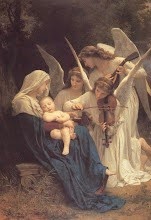
“It seemed he was driving somewhere in the steppe, in a place where he had served once long ago; he is being driven through the slush by a peasant, in a cart with a pair of horses. And it seems to Mitya that he is cold, it is the beginning of November, and the snow is pouring down in big, wet flakes that melt as soon as they touch the ground. And the peasant is driving briskly, waving his wip nicely, he has a long, fair beard, and he is not and old man, maybe around fifty, dressed in a gray peasant coat. And there is a village nearby- black, black huts, and half of the huts are burnt, just charred beams sticking up. And at the edge of the village there are peasant women standing along the road, many women, a long line of them, all of them thin, wasted, their faces a sort of brown color. Especially that one at the end- such a bony one, tall, looking as if she were forty, but she may be only twenty, with a long, thin face, and in her arms a baby is crying, and her breasts must be all dried up, not a drop of milk in them. And the baby is crying, crying, reaching out its bare little arms, its little fists somehow all blue from the cold.
'Why are they crying? Why are they crying?' Mitya asks, flying past them at a great clip.
'The wee one,' the driver answers, 'it's the wee one crying.' And Mitya is struck that he has said it in his own peasant way: 'the wee one,' and not “the baby.” And he likes that the peasant has said 'wee one': there seems to be more pity in it.
'But why is it crying?' Mitya insists, as if he were foolish, 'why are its little arms bare, why don't they wrap it up?'
'The wee one's cold, its clothes are frozen, they don't keep it warm.'
'But why is it so? Why?' foolish Mitya will not leave off.
'They're poor, burnt out, they've got no bread, they're begging for their burnt-down place.'
'No, no,' Mitya still seems not to understand, 'tell me: why are these burnt-out mothers standing here, why are the people poor, why is the wee one poor, why is the steppe bare, why don't they embrace and kiss, why don't they sing joyful songs, why are they blackened with such misery, why don't they feed the wee one?'
And he feels within himself that, though his questions have no reason or sense, he still certainly wants to ask in just that way, and he should ask in just that way. And he also feels a tenderness, such as he has never known before, surging up in his heart, he wants to weep, he wants to do something for them all, so that the wee one will no longer cry, so that the blackened, dried-up mother of the wee one will not cry either, so that there will be no more tears in anyone from that moment on, and it must be done at once, at once, without delay, and despite everything, with all his Karamazov unrestraint.”1
Thursday, May 14, 2009


Tuesday, May 12, 2009
Organic Living
This morning and I looked through our stockpile of food for something to nourish me at breakfast, I was struck by how removed from its original source our food is. Like cereal. What is “cereal” exactly? Oatmeal I understand, grains I understand, oats, rice, barley, eggs, pancakes, I understand all these things, but what the heck is cereal? I looked at the ingredients list and you know the prominent ingredient? Sugar. Surprise surprise. In one sense I am really excited about heading off to college, because then I can choose exactly what I eat and where it comes from. Sure, I'll miss my family and all, but right now, my reaction to the state of inorganic living in my house is “Get me out of here!” And it's not like I don't have organic food. I have it. In the forms of Minnesota-grown wild rice, oats, pearl barley, home-grown herbs, and home-made yogurt and bread, but I have no chance to use these things. They are completely incompatible with family dinners because my brothers and picky sister take one look at anything not resembling hot-dogs or pizza or cheese tacos and cry “ewwwwwww!” and refuse to touch it. My brother actually made himself throw up the crusts on the sandwich he was eating. Bread making and yogurt making are generally discouraged because of “mess” it makes, and the space and time it consumes. I don't mean to say bad things about my family, but I have to disagree with my parents' policy on the food they put into their children's mouths. My dad would love it if I made bread more, but my mom finds it both inconvenient and unnecessary. But, tending to my herbs this morning I was filled with a longing to taste vegetables fresh from the plant and plant and tend the soil. I want to touch the dewy leaves in the morning and smell the sweet earth.
Oh well. It's not a huge deal in the end, but something that I do feel very strongly about.
Oh well. It's not a huge deal in the end, but something that I do feel very strongly about.
Monday, May 11, 2009
Dimitri's Redemption
1
Every day of my life I've been beating my breast and promising to reform, and every day I've done the same vile things. I understand now that for men such as I a blow is needed, a blow of fate, to catch them as with a noose and bind them by an external force. Never, never would I have risen by myself! But th thunder has struck. I accept the torment of accusation and of my disgrace before all, I want to suffer and be purified by suffering!
All of us struggle to some extent with Dimitri's dilemma, that of promising reform as we go to sleep and swearing to change immediately, the very next morning. We spend half the night thinking of all our sins, recognizing them with revulsion and disgust and then declare in a fit of passion that we are cleansed of the evil, and that in the morning we shall make amends, and the go to sleep convinced of our own transformation. The next morning we arise, and we have forgotten all the beautiful visions of the night and begin again in in debauchery. Or maybe we last for a few days, maybe even weeks, but then we're back. Dimitri recognizes this and blessed is he for this clarity of vision. In the midst of his suffering he is able to witness the transcendental truth behind his suffering, and the meaning behind it all.
“If you come forward to serve the Lord,
prepare yourself for temptations...
For just as gold is tested in the fire,
so too are acceptable men in the furnace of humility.” 2
Back at the beginning of the book, Zosimov bowed down to the future great suffering Dimitri would have to bear, and in recognition of the pain he would have to endure. Throughout the book the phrase, “purification through suffering” has been tossed around and invoked by multiple characters, all in reference to so torment they bear. This is a great truth of life, that suffering is the road through which paradise comes into the world. Suffering and God are far from being incompatible. In fact, they are so intertwined as to make redemption impossible without suffering. Christ had to suffer for the sins of mankind, he had to die. It all comes back to the continual process of redemption; that salvation is not an event, but a process that is taking place here and now, in the hearts of all men.
The gospel yesterday was on God as the gardener, cutting off the branches that bear no fruit, and pruning the healthy branches, so that they produce more. I think that as modern American Christians we most often forget the part about “pruning” and its implications. God puts us through suffering and trials in order that we might grow. Temptations are chances for us to grow in virtue, not pitfalls in which there can only be failure. The devil certainly hates us getting close to the Lord, so he throws every distraction our way, especially if we pose a threat to his evil plans. (My mom used to flatter me by saying that all my near-death experiences were because the devil saw me as a potential threat and tried to eliminate me as quickly as possible. It's very flattering indeed to think that way. But protect me form pride, Lord.) This is true, and so many ask “Well, why does God allow bad things to happen?” Percicely because it is through this suffering and trial that we grow and produce more fruit for the kingdom. We need these times to become spiritually mature, just as we need times of fasting and exercise to purify our bodies of unnecessary junk or inhibiting excess. Suffering is the pruning shears, and we are the vine. If we bear good fruit then we should expect hardships to come our way, and accept them joyfully, for they are what bring us closer to Jesus.
1.Fyodor Dostoevsky, The Brothers Karamazov, trans. Richard Pevear and Larissa Volokhonsky (New York: Farrar, Straus and Giroux, 1990), 509.
2. Sirach 2:1,5
Sunday, May 10, 2009
Procrastinating
Never put off till tomorrow what you can do today
Procrastinating is never a good idea. NEVER
So here it is, the Sunday night before the week of the play, and I haven't gotten the vests for three actors sewn! ARG! this is why discipline is a good thing. DENY myself time watching Hindi movies. DENY myself lazy time reading Lloyd Alexander. DO what needs to be done, and be thankful. So now here is the question, do I stay up to all hours finishing them, or do I put it off till tomorrow?
I know what I am going to do, but this adventure will cost me a pretty penny of sleep and of irritation from my dad.
Thursday, May 7, 2009
The Answer to Ivan's question...
In his masterpiece of literary fiction, the Brother's Karamazov, Fyodor Dostoevsky sets forth the compelling riveting dilemma of God and the reality of human suffering. Ivan, the intellectual brother in the Karamazov trio, has encountered in the notion of God a conflict which he himself can not seem to resolve. He is a “collector” of little stories of human suffering, all which contribute to his unreconciled desire for the actualization of justice. Ivan's dilemma consists mainly of his desire to see the wrongs suffered by the innocent avenged. As he puts it to to Alyosha, “It's not God that I don't accept, you understand, it's this world of God's created by God that I do not accept and cannot agree to accept”.1 Ivan has a “childlike conviction” that the sufferings of all mankind will be smoothed over one day, and that all the irreconcilable things of this world will be reconciled, but he refuses to accept it. He doesn't care what may happen, he even wishes to see this take place, but he will not accept it when it does. Ivan even acknowledges his incompetence in understanding God's will, and isn't put off by that. “Who wants to know this damned good and evil at such a price? The whole world of human knowledge is not worth the tears of that little child to 'dear God.'”2 Ivan refuses to accept a world where the mother of a suffering child forgives her child's tormentor. To him, such “smoothing over” of crimes is unacceptable, and even unjust. This is his suffering, and one can almost hear him dare anyone to answer his question, if they can. Answer why a loving God would build the salvation of mankind on the suffering on the innocents. But perhaps there is an answer. As the elder, Zosimov, lies dying in his cell, he proceeds to give a deathbed sermon on the world and life, which seems to answer, at least in part, the great dilemma of Ivan. Zosimov calls for all to embrace suffering, and claims that only through suffering will man be happy. The elders' words; “verily, each of us is guilty before everyone, for everyone and everything”3 he would have us believe, are the key to unlock Ivan's great struggle with suffering. The three components of this accountability include the intertwining of suffering and salvation, Isolationism, and the burden of freedom.
The source of Ivan's dilemma lies in his perspective of human suffering. He sees human suffering as being the foundation upon which salvation is accomplished, and if so, then God is a cruel and inhumane god. How could a God who is good and merciful and kind base his system of human redemption on the tears of a child? Ivan can not accept this. He refuses to accept this notion that God would allow for the unavenged degradation of innocents, and thus he respectfully “turns in his ticket”.
Using the claim of the innocent children is all well and good, because it illustrated perfectly the falleness of the entire world, and not just of mature adults. The whole earth fell when man fell, and thus all men must bear the burden of Adam's sin. All, from the old man who will die tonight to the child just conceived. All are accountable for everything before everyone, and thus all suffer the communal death chosen by Adam. Even the earth itself fell, and was corrupted by sin, not of its own volition of course, but nevertheless corrupted. Thus it is that we have earthquakes and natural disasters. Thus it is that nature, a force so creative and beautiful, is also a source of destruction. Mirrored in the corruption of sin that we brought to a sinless world is the corruption of pollution. The rottenness within can not help but find physical signs of expressing it's torment. But even now, the resurrection is taking place, even now as we speak. In the little corners of mens' hearts the battle is won and lost. Ivan claims that our salvation, that the resurrection, takes place on the backs of the children's suffering. And it is true, that suffering is indeed the root of our salvation, for “by his stripes we were healed”. It is the one true innocent one who was sacrificed, the unblemished lamb who took all our sufferings to the cross and died there, so that death may no longer reign over us. “Verily, verily, I say unto you, except a corn of wheat shall fall upon the ground and die, it abideth alone: but if it die, it bringeth forth much fruit.”4 Suffering is redemptive, because through this continual death to the corrupted life and to sin, Paradise is brought forth upon the earth. In this sense, Paradise and suffering can coexist together, just as righteousness and sin coexist in the human soul. The resurrection is an ongoing process, and men are called to die to this world in order that the fullness of joy and glory can transcend the physical and touch their world. Suffering does not separate man from happiness, but rather unifies him with it. This life is Paradise, and it is through the knowledge of accountability that man accepts brotherly love that Paradise really happens.
But now for the climax of the issue. Ivan wishes to see retribution, here, before his eyes. He wants justice to be wrought upon the earth, and in the measure that he himself declares. As Ivan says in regards to a child murderer; “Well, what to do with him? Shoot him? Shoot him for our moral satisfaction”5 However, as Zosimov says, “everyone is accountable to everyone for everything” and once this is realized on the earth, man will realize how long he has sat in darkness. Mankind needs only to want this and paradise is here. In a sense, Ivan is hopeless to reconcile his dilemma. Ivan will never have what he wants, because he is unwilling to take the necessary step to achieve it, which is accepting accountability for everything before everyone. “Until one has indeed become the brother of all, there will be no brotherhood.”6 In fact, this rebellion of Ivan, who “respectfully returns the ticket”, is a propagator of the great and vicious cycle of human suffering. Ivan's rebellion is a form of the isolation Zosimov speaks of with great vehemence, and most potent a reflection of the great rebellion against God that suicide actually is. Ivan is one of those men who is swallowed up in his isolation. “He loves no one” is exactly the key to his separation from paradise. Ivan is striving to separate himself from everyone, including Katerina, which is why he is departing and breaking off all ties. He is wishing to experience a fullness of life within himself, but out of his efforts comes “not fullness of life, but full suicide, for instead of the fullness of self-determination, he falls into complete isolation.”7 Ivan must learn that he is accountable to humanity and bow an kiss the earth, and realize that his security lies not in his own solitary effort, but in the general wholeness of humanity.
Ivan claims that he seeks the physical manifestation of justice on the earth, and the equality of man upheld. He wishes his own justice to be made the code of human interaction, and such is also the thinking of many scientific and intellectual minds in the world. In this sense he makes the same mistake as many men, including Dostoevsky's literary protagonist, Raskolnikov in Crime and Punishment, he upholds his own sensibilities of justice over divine justice. Zosimov acutely describes the enacting of man's sensibilities of justice as rotten and dangerous, accomplishing the opposite of it's seemed goal. The world is proclaimed free but what lies in their freedom is merely slavery and suicide. Increasing their needs is their freedom, and this leads to isolation for the rich and envy and murder for the poor. Such freedoms and unity are false, do not believe them. Rather, again the necessity of acknowledging accountability for everyone for everything, is the root of true equality and freedom in the broken world. “Equality is only in man's spiritual dignity, and only among us will that be understood.”8 Zosima claims, and declares that through the great human communion of brotherly love the “dream” of unity will be achieved. Ivan desires that forgiveness be withheld from those who do not “deserve” it, but who is he to cast judgment upon his fellow man. Even that madman who tore apart the little boy, even for the sake of that little child who beats her chest with her tiny fist, justice is not his to execute. In fact, Ivan's own logic is what propagates the cycle of hatred and isolation which tears apart the human race, and does not unite it at all. Ivan in the Grand Inquisitor, sets forth that Christ made a mistake in giving man this ultimate freedom. “Did you forget that peace and even death are dearer to man than free choice in the knowledge of good and evil?”9 This Grand Inquisitor accuses God, dares to claim he understands more than God himself, his own system over God's. In holding freedom over all, Ivan claims that Jesus has given man a task to great for him. Not only does this completely contradict scripture, but what is the worm that he should say to his creator, “I know my needs better than you”. Ludicrous! Does the Grand Inquisitor not know that freedom is exactly what it is, freedom? That no matter how man may thrash, he is exceedingly free to choose how he will live his life? This choice is before all men, and is indeed a burden, for man must now realize that he is accountable to all humanity and to God for his decision, and no one else can make his decision for him. The grand Inquisitor claims that man needs a universal ruler, but denies man of the singular unifying factor of brotherly love, whose source is the knowledge of accountability. This freedom, God's freedom, is the source of the knowledge of accountability, and it is through this knowledge that the dream of peace which all men long for will be accomplished.
Ivan's struggle is a real and compelling dilemma that most face at some time in their lives. But under the understanding that all are guilty before all, for everyone and everything, all things work together for the glory of God. The causes and roots of the evil which Ivan sees in the world will be shaken out at last, if mankind but embrace this crucial perspective. Isolation, the coexistence of suffering and paradise, and the seemed burden of freedom are all venues which prove this maxim to be the foundation on which all future happiness for man shall be accomplished
The source of Ivan's dilemma lies in his perspective of human suffering. He sees human suffering as being the foundation upon which salvation is accomplished, and if so, then God is a cruel and inhumane god. How could a God who is good and merciful and kind base his system of human redemption on the tears of a child? Ivan can not accept this. He refuses to accept this notion that God would allow for the unavenged degradation of innocents, and thus he respectfully “turns in his ticket”.
Using the claim of the innocent children is all well and good, because it illustrated perfectly the falleness of the entire world, and not just of mature adults. The whole earth fell when man fell, and thus all men must bear the burden of Adam's sin. All, from the old man who will die tonight to the child just conceived. All are accountable for everything before everyone, and thus all suffer the communal death chosen by Adam. Even the earth itself fell, and was corrupted by sin, not of its own volition of course, but nevertheless corrupted. Thus it is that we have earthquakes and natural disasters. Thus it is that nature, a force so creative and beautiful, is also a source of destruction. Mirrored in the corruption of sin that we brought to a sinless world is the corruption of pollution. The rottenness within can not help but find physical signs of expressing it's torment. But even now, the resurrection is taking place, even now as we speak. In the little corners of mens' hearts the battle is won and lost. Ivan claims that our salvation, that the resurrection, takes place on the backs of the children's suffering. And it is true, that suffering is indeed the root of our salvation, for “by his stripes we were healed”. It is the one true innocent one who was sacrificed, the unblemished lamb who took all our sufferings to the cross and died there, so that death may no longer reign over us. “Verily, verily, I say unto you, except a corn of wheat shall fall upon the ground and die, it abideth alone: but if it die, it bringeth forth much fruit.”4 Suffering is redemptive, because through this continual death to the corrupted life and to sin, Paradise is brought forth upon the earth. In this sense, Paradise and suffering can coexist together, just as righteousness and sin coexist in the human soul. The resurrection is an ongoing process, and men are called to die to this world in order that the fullness of joy and glory can transcend the physical and touch their world. Suffering does not separate man from happiness, but rather unifies him with it. This life is Paradise, and it is through the knowledge of accountability that man accepts brotherly love that Paradise really happens.
But now for the climax of the issue. Ivan wishes to see retribution, here, before his eyes. He wants justice to be wrought upon the earth, and in the measure that he himself declares. As Ivan says in regards to a child murderer; “Well, what to do with him? Shoot him? Shoot him for our moral satisfaction”5 However, as Zosimov says, “everyone is accountable to everyone for everything” and once this is realized on the earth, man will realize how long he has sat in darkness. Mankind needs only to want this and paradise is here. In a sense, Ivan is hopeless to reconcile his dilemma. Ivan will never have what he wants, because he is unwilling to take the necessary step to achieve it, which is accepting accountability for everything before everyone. “Until one has indeed become the brother of all, there will be no brotherhood.”6 In fact, this rebellion of Ivan, who “respectfully returns the ticket”, is a propagator of the great and vicious cycle of human suffering. Ivan's rebellion is a form of the isolation Zosimov speaks of with great vehemence, and most potent a reflection of the great rebellion against God that suicide actually is. Ivan is one of those men who is swallowed up in his isolation. “He loves no one” is exactly the key to his separation from paradise. Ivan is striving to separate himself from everyone, including Katerina, which is why he is departing and breaking off all ties. He is wishing to experience a fullness of life within himself, but out of his efforts comes “not fullness of life, but full suicide, for instead of the fullness of self-determination, he falls into complete isolation.”7 Ivan must learn that he is accountable to humanity and bow an kiss the earth, and realize that his security lies not in his own solitary effort, but in the general wholeness of humanity.
Ivan claims that he seeks the physical manifestation of justice on the earth, and the equality of man upheld. He wishes his own justice to be made the code of human interaction, and such is also the thinking of many scientific and intellectual minds in the world. In this sense he makes the same mistake as many men, including Dostoevsky's literary protagonist, Raskolnikov in Crime and Punishment, he upholds his own sensibilities of justice over divine justice. Zosimov acutely describes the enacting of man's sensibilities of justice as rotten and dangerous, accomplishing the opposite of it's seemed goal. The world is proclaimed free but what lies in their freedom is merely slavery and suicide. Increasing their needs is their freedom, and this leads to isolation for the rich and envy and murder for the poor. Such freedoms and unity are false, do not believe them. Rather, again the necessity of acknowledging accountability for everyone for everything, is the root of true equality and freedom in the broken world. “Equality is only in man's spiritual dignity, and only among us will that be understood.”8 Zosima claims, and declares that through the great human communion of brotherly love the “dream” of unity will be achieved. Ivan desires that forgiveness be withheld from those who do not “deserve” it, but who is he to cast judgment upon his fellow man. Even that madman who tore apart the little boy, even for the sake of that little child who beats her chest with her tiny fist, justice is not his to execute. In fact, Ivan's own logic is what propagates the cycle of hatred and isolation which tears apart the human race, and does not unite it at all. Ivan in the Grand Inquisitor, sets forth that Christ made a mistake in giving man this ultimate freedom. “Did you forget that peace and even death are dearer to man than free choice in the knowledge of good and evil?”9 This Grand Inquisitor accuses God, dares to claim he understands more than God himself, his own system over God's. In holding freedom over all, Ivan claims that Jesus has given man a task to great for him. Not only does this completely contradict scripture, but what is the worm that he should say to his creator, “I know my needs better than you”. Ludicrous! Does the Grand Inquisitor not know that freedom is exactly what it is, freedom? That no matter how man may thrash, he is exceedingly free to choose how he will live his life? This choice is before all men, and is indeed a burden, for man must now realize that he is accountable to all humanity and to God for his decision, and no one else can make his decision for him. The grand Inquisitor claims that man needs a universal ruler, but denies man of the singular unifying factor of brotherly love, whose source is the knowledge of accountability. This freedom, God's freedom, is the source of the knowledge of accountability, and it is through this knowledge that the dream of peace which all men long for will be accomplished.
Ivan's struggle is a real and compelling dilemma that most face at some time in their lives. But under the understanding that all are guilty before all, for everyone and everything, all things work together for the glory of God. The causes and roots of the evil which Ivan sees in the world will be shaken out at last, if mankind but embrace this crucial perspective. Isolation, the coexistence of suffering and paradise, and the seemed burden of freedom are all venues which prove this maxim to be the foundation on which all future happiness for man shall be accomplished
Wednesday, May 6, 2009
On Discipline
Discipline is that exercise of the will, by which we attain mastery over the appetites and the selfishness of soul. Unfortunately, discipline is not a virtue I possess. I desire it, only God knows how much I desire it, but merely wanting is not enough. Discipline, as it is an exercise of the will, is not attained by desiring, but by being actively willed. I have heard it said that to love is to will the good of another. This at first seemed a very wishy-washy way of describing love, one which had no real force or implications behind it. But after thinking it over, I realized that willing the good of another has HUGE implications! Once again, I say that to will something is far more than just desiring. Will is a faculty of the soul which is greatly ignored these days, and in many cases it is passed off as "stubbornness". But it is in us, as sure as the intellect and as sure as emotions. Perhaps this is why discipline is so lacking in our culture, because we hardly even acknowledge the existence of this thing called "the will", let alone focus on strengthening it. I think, for myself anyway, the road to attaining discipline consists mostly in an active awareness of situations in which I could strengthen it. Like getting up early, just for the heck of it. Or denying myself desert. Sacrifice again, wow. Just can't get away from it, the road to paradise really is through sacrifice.
Tuesday, May 5, 2009
Formal Dress
It's Finished!
Well, as finished as it's going to get. I began by Formal dress yesterday, worked on it all night, brought the skirt to school and worked on it during my breaks and spare time, and then finished it up at home. I must say, I am very proud of myself this year. My efforts are so much better than they were last year. I like the dress best without straps, but for modesty's sake, they were a must. I am not about to get thrown off a riverboat for my own aesthetic preferences. I intend to get some pictures of it up on the blog one of these days, but my camera is lousy. I'll need to borrow someone's. But anyway, Mrs. Conway asked me if I could bring the dress in tomorrow and put it in the Ancient Technologies table during the fine Arts Festival. I'm not so sure I want everyone to see my rather messy seamstress-ship, but hey, anything to please a teacher, right? I'm just a little worried that a few people who actually know about sewing won't refrain from bashing my efforts. I am officially excited for Spring Formal this year! I even have really cute shoes that Mrs. Singleton lent me just for the occasion, and I can relax before the event. Not like last year. *shudder* That was awful. I will never set finishing a dress off until the last hour again! Which reminds me, I need to grab some flowers for a corsage, roses would be best!
Well, as finished as it's going to get. I began by Formal dress yesterday, worked on it all night, brought the skirt to school and worked on it during my breaks and spare time, and then finished it up at home. I must say, I am very proud of myself this year. My efforts are so much better than they were last year. I like the dress best without straps, but for modesty's sake, they were a must. I am not about to get thrown off a riverboat for my own aesthetic preferences. I intend to get some pictures of it up on the blog one of these days, but my camera is lousy. I'll need to borrow someone's. But anyway, Mrs. Conway asked me if I could bring the dress in tomorrow and put it in the Ancient Technologies table during the fine Arts Festival. I'm not so sure I want everyone to see my rather messy seamstress-ship, but hey, anything to please a teacher, right? I'm just a little worried that a few people who actually know about sewing won't refrain from bashing my efforts. I am officially excited for Spring Formal this year! I even have really cute shoes that Mrs. Singleton lent me just for the occasion, and I can relax before the event. Not like last year. *shudder* That was awful. I will never set finishing a dress off until the last hour again! Which reminds me, I need to grab some flowers for a corsage, roses would be best!
Subscribe to:
Posts (Atom)