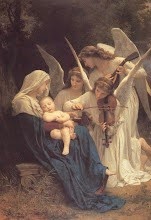
Upon Awakening
- Katenka Nobernova
Upon awakening,
I find myself
alone among the sheets
instead of in your arms,
where up until a moment ago
I was dreaming peacefully.
My consciousness longs to flee again
into the dark illusions of the night
and I lie in melancholy stupor
as though a leaden weight
had replaced the beating of my heart.
You birds! You bright morning sun!
How you used to full me with an ecstatic joy
when I gazed upon the world
rising from slumber
But now your brightness mocks me
and my rising from the bedchamber
is filled with bitterness
Sunday, February 13, 2011


Poem of the day
O, nye grusti
- Aleksei Apukhtin
O, nye grusti po mnye!
Ya tam, gdye nyet stradanii
Zabud' bylykh skorby muchitel'nye sny
Pust' budut obo mnye tvoi vospominan 'ya
Scetlyey, chem pervyi den'vesny.
O, nye toskui po mnye!
Myezh nami nyet razluki,
Ya takzhe, kak i vstar', dushe tvpyey blizka.
Menya po-pryezhnyemu tvoi volnuyut muki,
Menya gnyetyot tvoya toska.
Zhivi! ty dolzhen zhit'! I yesli siloy chuda
Ty zdyes' naydoyosh otradu i pokoy,
To znay, chto eto ya otkliknulas' ottuda
Na zov dushi tvoyey bol'noy.
Trans.
Oh, Do Not Grieve
Oh, do not grieve for me!
I am where there is no pain;
Banish tormenting dreams of troubles past and gone,
And may your memories of me
Be brighter than the spring's first day.
Oh, do not pine for me!
For us there is no parting.
Just as of old, I am near to your soul.
As before, your torments distress me,
Your anguish oppresses me still.
Live! You must live! and if miraculously
You find comfort and peace here on earth,
Then know that it is I who responded from that other world
To the summons of your afflicted soul.
Set By Rachmaninoff
http://www.youtube.com/watch?v=LghbJSUO1HU
- Aleksei Apukhtin
O, nye grusti po mnye!
Ya tam, gdye nyet stradanii
Zabud' bylykh skorby muchitel'nye sny
Pust' budut obo mnye tvoi vospominan 'ya
Scetlyey, chem pervyi den'vesny.
O, nye toskui po mnye!
Myezh nami nyet razluki,
Ya takzhe, kak i vstar', dushe tvpyey blizka.
Menya po-pryezhnyemu tvoi volnuyut muki,
Menya gnyetyot tvoya toska.
Zhivi! ty dolzhen zhit'! I yesli siloy chuda
Ty zdyes' naydoyosh otradu i pokoy,
To znay, chto eto ya otkliknulas' ottuda
Na zov dushi tvoyey bol'noy.
Trans.
Oh, Do Not Grieve
Oh, do not grieve for me!
I am where there is no pain;
Banish tormenting dreams of troubles past and gone,
And may your memories of me
Be brighter than the spring's first day.
Oh, do not pine for me!
For us there is no parting.
Just as of old, I am near to your soul.
As before, your torments distress me,
Your anguish oppresses me still.
Live! You must live! and if miraculously
You find comfort and peace here on earth,
Then know that it is I who responded from that other world
To the summons of your afflicted soul.
Set By Rachmaninoff
http://www.youtube.com/watch?v=LghbJSUO1HU
Sunday, December 5, 2010
Exerpts from The Council of Trent
TOUCHING THE OPENING OF THE COUNCIL
Doth it please you, unto the praise and glory of the holy and undivided Trinity, Father, and Son, and Holy Ghost; for the increase and exaltation of the Christian faith and religion; for the extirpation of heresies; for the peace and union of the Church; for the reformation of the Clergy and Christian people; for the depression and extinction of the enemies of the Christian name, to decree and declare that the sacred and general council of Trent do egin, and hath begun?
They answered: It pleaseth us.
CONCERNING ORIGINAL SIN
That our own Catholic faith, without which it is impossible to please God, may, errors being purged away, continue in its own perfect and spotless integrity, and that the Christian people may not be carried about with every wind of doctrine; whereas that old serpent, the perpetual enemy of mankind, amongst the very many evils with which the Church of God is in these our times troubled, has also stirred up not only new, but even old, dissensions touching original sin, and the remedy thereof; the sacred and holy, ecumenical and general Synod of Trent, - lawfully assembled in the Holy See presiding therein, - wishing now to come to the reclaiming of the erring, and the most approved councils, and the judgment and consent of the Church herself, ordains, confesses, and declares these things touching the said original sin:
1. If any one does not confess that the first man, Adam, when he had transgressed the commandment of God in Paradise, immediately lost the holiness and justice wherein he had been constituted; and that he incurred, through the offense of that prevarication, the wrath and indignation of God, and consequently death, with which God had previously threatened him, and, together with death, captivity under his power who thenceforth had the empire of death, that is to say, the devil, and that the entire Adam, through that offense of prevarication, was changed, in body and soul, for the worse; let him be anathema.
3. If any one asserts that this sin of Adam - which in its origin is one, and being transfused into all by propagation, not by imitation, is in each one as his own - is taken away either by the power of human nature, or by any other remedy than the merit of the one mediator our Lord Jesus Christ, who hath reconciled us to God in his own blood, made unto us justice, sanctification, and redemption; or if he denies that the said merit of Jesus Christ is applied both to adults and to infants, by the sacrament of baptism rightly administered in the form of the Church; let him be anathema...
ON THE SACRAMENTS IN GENERAL
Canon I. If any one saith, that the sacraments of the New Law were not all instituted by Jesus Christ, our Lord; or, that they are more, or less, than seven, to wit, Baptism, Confirmation, the Eucharist, Penance, Extreme Unction, Order, and Matrimony; or even that any one of these seven is not truly and properly a sacrament; let him be anathema.
Canon IV. If any one saith, that the sacraments of the New Law are not necessary unto salvation, but superfluous; and that, without them, or without the desire thereof, men obtain of God, through faith alone, the grace of justification; -though all (the sacraments) are not indeed necessary for every individual; let him be anathema.
Canon VI. If any one saith, that the sacraments of the New Law so not contain the grace which they signify; or, that they do not confer that grace on those who do not place an obstacle thereunto; as though they were merely outward signs of grace or justice received through faith, and certain marks of the Christian profession, whereby believers are distinguished amongst men from unbelievers; let him be anathema.
Canon X. If any one saith, that all Christian have power to administer the word, and all the sacraments; let him be anathema.
ON THE MOST HOLY SACRAMENT OF THE EUCHARIST
Canon I. If any one deny, that, in the sacrament of the most holy Eucharist, are contained truly, really, and substantially, the body and blood together with the soul and divinity of our Lord esus Christ, and consequently the whole Christ: but saith that He is only therein ans a sign, or in figure, or virtue: let him be anathema.
Canon II. If anyone saith that in the sacred and holy sacrament of the Eucharist, the substance of the bread and wine remains conjointly with the body and blood of our Lord Jesus Christ, and denies that wonderful and singular conversion or the whole substance of the bread into the Body, and of the whole substance of the wine into the Blood - the species only of the bread and wine remaining -which conversion indeed the Catholic Church most aptly calls transubstantiation; let him be anathema.
ON THE ECCLESIASTICAL HIERARCHY, AND ON ORDINATION
...If any one affirm, that all Christians indiscriminately are priests of the New Testament, or that they are all mutually endowed with an equal spiritual power, he clearly does nothing but confound the ecclesiastical hierarchy; which is as an army set in array...
...It decree, that all those who, being only called and instututed by the people, or by the civil power and magistrate, ascend to the exercise of these ministrations, and those who of their own rashness assume them to themselves, are not ministers of the Church, but are to be looked upon as thieves and robbers, who have not entered by the door. These are the things which it hath seemed good to the sacred Synod to teach the faithful of Christ in general terms, touching the sacrament of Order.
ON THE SACRAMENT OF MATRIMONY
Canon IX. If anyone saith, that clerics constituted in sacred orders of Regulars, who have solemnly professed chastity, are able to contract marriage, and that being contracted it is valid, notwithstanding the ecclesiastical law, or vow: and that the contrary is nothing else than to condemn marriage: and, that all who do not feel that they have the gift of chastity; even they have made a vow thereof, may contract marriage: let him be anathema: seeing that God refuses not that gift to those who ask for it rightly; neither does He suffer us to be tempted above that which we are able.
Canon X. If anyone saith that the marriage state is to be placed above the state of virginity and of celibacy, and that it is not better and more blessed to remain in virginity, or in celibacy, than to be united in matrimony; let him be anathema.
ON THE INVOCATION; VENERATION AND RELICS OF SAINTS; AND ON SACRED IMAGES
The holy Synod enjoins all bishops and others who sustain the office and charge of teaching, that, agreeably to the usage of the Catholic and Apostolic Church, received from the primitive times of the Christian religion, and agreeably to the consent of the holy Fathers, and to the degrees of sacred councils, they especially instruct the faithful diligently concerning the intercession and invocation of saints; the honor given to relics; and the legitimate use of images; teaching them that the saints who reign together with Christ, offer up their own prayers to god for men, that it is good and useful supplicantly to invoke them, and to have recourse to their prayers, aid and help for obtaining benefits from God, through His Son, Jesus Christ, our Lord, who is alone Redeemer and Savior; but that they think impiously, who denies that the saints, who enjoy eternal happiness in heaven, are to be invocated or who assert either that they do not pray for men; or that the invocation of them to pray for each of us even in particular is idolatry or that it is repugnant to the word of God; and is opposed to the honor of the one mediator between god and men, Christ Jesus; or that it is foolish to supplicate, vocally or mentally, those who reign in heaven. Also, that the holy bodies of holy martyrs, and of those now living with Christ... They who affirm that veneration and honor are not due to the relics of saints; or, that these, and other sacred monuments, are uselessly honored by the faithful; and that the places dedicated to the memories of the saints are in vain visited with the view of obtaining their aid; are wholly to be condemned, as the Church already long since condemned, and now also condemns.
CARDINALS AND ALL PRELATES OF THE CHURCHES SHALL BE CONTENT WITH MODEST FURNITURE AND A FRUGAL TABLE: THEY SHALL NOT ENRICH THEIR RELATIVES OR DOMESTICS OUT OF the PROPERTY OF THE CHURCH
...Wherefore, after the example of our fathers in the Council of Carthage, it not only orders that bishops be content with modest furniture, and a frugal table and diet, but that they also give heed that in the rest of their manner of living, and in their whole house, there be nothing seen that is alien from this holy institution, and which does not manifest simplicity, zeal toward God, and a contempt of vanities. Also, it wholly forbids them to enrich their oen kindred or domestics out of the revenues of the church... It would seem to be a shame, if they did not at the same time shine so pre-eminent in virtue and in the discipline of their lives, as deservedly to draw upon themselves the eyes of all men.
Doth it please you, unto the praise and glory of the holy and undivided Trinity, Father, and Son, and Holy Ghost; for the increase and exaltation of the Christian faith and religion; for the extirpation of heresies; for the peace and union of the Church; for the reformation of the Clergy and Christian people; for the depression and extinction of the enemies of the Christian name, to decree and declare that the sacred and general council of Trent do egin, and hath begun?
They answered: It pleaseth us.
CONCERNING ORIGINAL SIN
That our own Catholic faith, without which it is impossible to please God, may, errors being purged away, continue in its own perfect and spotless integrity, and that the Christian people may not be carried about with every wind of doctrine; whereas that old serpent, the perpetual enemy of mankind, amongst the very many evils with which the Church of God is in these our times troubled, has also stirred up not only new, but even old, dissensions touching original sin, and the remedy thereof; the sacred and holy, ecumenical and general Synod of Trent, - lawfully assembled in the Holy See presiding therein, - wishing now to come to the reclaiming of the erring, and the most approved councils, and the judgment and consent of the Church herself, ordains, confesses, and declares these things touching the said original sin:
1. If any one does not confess that the first man, Adam, when he had transgressed the commandment of God in Paradise, immediately lost the holiness and justice wherein he had been constituted; and that he incurred, through the offense of that prevarication, the wrath and indignation of God, and consequently death, with which God had previously threatened him, and, together with death, captivity under his power who thenceforth had the empire of death, that is to say, the devil, and that the entire Adam, through that offense of prevarication, was changed, in body and soul, for the worse; let him be anathema.
3. If any one asserts that this sin of Adam - which in its origin is one, and being transfused into all by propagation, not by imitation, is in each one as his own - is taken away either by the power of human nature, or by any other remedy than the merit of the one mediator our Lord Jesus Christ, who hath reconciled us to God in his own blood, made unto us justice, sanctification, and redemption; or if he denies that the said merit of Jesus Christ is applied both to adults and to infants, by the sacrament of baptism rightly administered in the form of the Church; let him be anathema...
ON THE SACRAMENTS IN GENERAL
Canon I. If any one saith, that the sacraments of the New Law were not all instituted by Jesus Christ, our Lord; or, that they are more, or less, than seven, to wit, Baptism, Confirmation, the Eucharist, Penance, Extreme Unction, Order, and Matrimony; or even that any one of these seven is not truly and properly a sacrament; let him be anathema.
Canon IV. If any one saith, that the sacraments of the New Law are not necessary unto salvation, but superfluous; and that, without them, or without the desire thereof, men obtain of God, through faith alone, the grace of justification; -though all (the sacraments) are not indeed necessary for every individual; let him be anathema.
Canon VI. If any one saith, that the sacraments of the New Law so not contain the grace which they signify; or, that they do not confer that grace on those who do not place an obstacle thereunto; as though they were merely outward signs of grace or justice received through faith, and certain marks of the Christian profession, whereby believers are distinguished amongst men from unbelievers; let him be anathema.
Canon X. If any one saith, that all Christian have power to administer the word, and all the sacraments; let him be anathema.
ON THE MOST HOLY SACRAMENT OF THE EUCHARIST
Canon I. If any one deny, that, in the sacrament of the most holy Eucharist, are contained truly, really, and substantially, the body and blood together with the soul and divinity of our Lord esus Christ, and consequently the whole Christ: but saith that He is only therein ans a sign, or in figure, or virtue: let him be anathema.
Canon II. If anyone saith that in the sacred and holy sacrament of the Eucharist, the substance of the bread and wine remains conjointly with the body and blood of our Lord Jesus Christ, and denies that wonderful and singular conversion or the whole substance of the bread into the Body, and of the whole substance of the wine into the Blood - the species only of the bread and wine remaining -which conversion indeed the Catholic Church most aptly calls transubstantiation; let him be anathema.
ON THE ECCLESIASTICAL HIERARCHY, AND ON ORDINATION
...If any one affirm, that all Christians indiscriminately are priests of the New Testament, or that they are all mutually endowed with an equal spiritual power, he clearly does nothing but confound the ecclesiastical hierarchy; which is as an army set in array...
...It decree, that all those who, being only called and instututed by the people, or by the civil power and magistrate, ascend to the exercise of these ministrations, and those who of their own rashness assume them to themselves, are not ministers of the Church, but are to be looked upon as thieves and robbers, who have not entered by the door. These are the things which it hath seemed good to the sacred Synod to teach the faithful of Christ in general terms, touching the sacrament of Order.
ON THE SACRAMENT OF MATRIMONY
Canon IX. If anyone saith, that clerics constituted in sacred orders of Regulars, who have solemnly professed chastity, are able to contract marriage, and that being contracted it is valid, notwithstanding the ecclesiastical law, or vow: and that the contrary is nothing else than to condemn marriage: and, that all who do not feel that they have the gift of chastity; even they have made a vow thereof, may contract marriage: let him be anathema: seeing that God refuses not that gift to those who ask for it rightly; neither does He suffer us to be tempted above that which we are able.
Canon X. If anyone saith that the marriage state is to be placed above the state of virginity and of celibacy, and that it is not better and more blessed to remain in virginity, or in celibacy, than to be united in matrimony; let him be anathema.
ON THE INVOCATION; VENERATION AND RELICS OF SAINTS; AND ON SACRED IMAGES
The holy Synod enjoins all bishops and others who sustain the office and charge of teaching, that, agreeably to the usage of the Catholic and Apostolic Church, received from the primitive times of the Christian religion, and agreeably to the consent of the holy Fathers, and to the degrees of sacred councils, they especially instruct the faithful diligently concerning the intercession and invocation of saints; the honor given to relics; and the legitimate use of images; teaching them that the saints who reign together with Christ, offer up their own prayers to god for men, that it is good and useful supplicantly to invoke them, and to have recourse to their prayers, aid and help for obtaining benefits from God, through His Son, Jesus Christ, our Lord, who is alone Redeemer and Savior; but that they think impiously, who denies that the saints, who enjoy eternal happiness in heaven, are to be invocated or who assert either that they do not pray for men; or that the invocation of them to pray for each of us even in particular is idolatry or that it is repugnant to the word of God; and is opposed to the honor of the one mediator between god and men, Christ Jesus; or that it is foolish to supplicate, vocally or mentally, those who reign in heaven. Also, that the holy bodies of holy martyrs, and of those now living with Christ... They who affirm that veneration and honor are not due to the relics of saints; or, that these, and other sacred monuments, are uselessly honored by the faithful; and that the places dedicated to the memories of the saints are in vain visited with the view of obtaining their aid; are wholly to be condemned, as the Church already long since condemned, and now also condemns.
CARDINALS AND ALL PRELATES OF THE CHURCHES SHALL BE CONTENT WITH MODEST FURNITURE AND A FRUGAL TABLE: THEY SHALL NOT ENRICH THEIR RELATIVES OR DOMESTICS OUT OF the PROPERTY OF THE CHURCH
...Wherefore, after the example of our fathers in the Council of Carthage, it not only orders that bishops be content with modest furniture, and a frugal table and diet, but that they also give heed that in the rest of their manner of living, and in their whole house, there be nothing seen that is alien from this holy institution, and which does not manifest simplicity, zeal toward God, and a contempt of vanities. Also, it wholly forbids them to enrich their oen kindred or domestics out of the revenues of the church... It would seem to be a shame, if they did not at the same time shine so pre-eminent in virtue and in the discipline of their lives, as deservedly to draw upon themselves the eyes of all men.
Monday, November 29, 2010
Morality or Conformity
Character education as defined by Kauchak and Eggen (2011) “suggests that moral values and positive character traits, such as honesty and citizenship, should be emphasized, taught, and rewarded” (p.339). The big question regarding if character education should be taught in schools is if teachers have the responsibility to shape or influence a child's private personal behavior. Those who object to the presence of character education in the classroom curriculum often laud fears that children will be indoctrinated in a certain, selective brand of morality. Others see the movement toward moral thinking as a rejection of traditional education (Fine, 1995, p. 126), and still others are suspicious of a conspiracy to subvert authority and create “anti-American” children (Fine,1995, p. 121). The most basic argument against moral education is the argument that schools are not obligated and, in fact, should not teach morality in school. However, in any realm involving the human person, existential and moral questions will arise. This is especially true in the classroom, where differences of experience will give rise to differences of opinion, and if students do not know how to properly handle conflict and differences of opinion, they will go off in life unprepared to handle conflict in the broader human community. Does any teacher wish to see the children in their classroom become a bully, be irresponsible or disrespectful? In loco parentis means more than the avoidance of physical harm. In loco parentis means that just as a parent has a serious responsibility to instruct their children and guide their moral development, so too do teachers have the ethical responsibility, and even the obligation, to take up the cross where the parents have entrusted it.
Character education, however, does not begin with regulated behavior. Children are not animals and should not learn merely to obey, but to become good persons with an upright character. For teachers to foster character growth in their students, they must first learn the basic reasons for good behavior, otherwise known as moral education. Moral education must be the basis for character education in order that students not only learn how to behave, but why behavior can be good or bad at all. Therefore, it is of great importance that teachers take great care to supplement the bare material knowledge of the curriculum with questions about broader human concepts, in order to help their students become more informed and critical thinkers. The goal can not be to indoctrinate children into a particular method of thought, but to give them the tools to come to their own decisions about what they believe. The goal of teachers should be to support the growth of intelligent and thoughtful individuals who think about their actions and their values. One of the key issues is teaching children morality and not conformity to a particular standard of behavior. Many critiques of moral education debate from the opinion that education should be focused on the basic components of knowledge. However, this viewpoint skirts a pivotal point of discussion. Human interaction are made up of existential questions, and the human experience is filled with complex questions of right and wrong. Moral and existential issues are at the core of all academic disciplines. Human knowledge has come into existence largely as the result of people pursuing answers to moral dilemmas (Simon, 2001, p. 2). Without examining subjects like history, philosophy and literature from the perspective of moral thoughtfulness, their vitality and meaning are drained to the point of impotency. In the classroom, there are always perfect settings for a discussion on the belief of an eternal human soul in literature. Or, in a history class discussing the Holocaust, questions of genocide should naturally rise to he surface. Even in math, when discussing imaginary numbers, students could investigate the nature of numbers themselves. What are numbers? Are they merely quantitative words to describe plurality? Education should never restrict itself to facts, for life is no a collection of facts, but an intricate web of facts, experiences, and choices.
Moral education seems to have many different dimensions. There is teaching personal moral ethics and values, such as kindness, generosity, tolerance, how to properly deal with anger, and other such individual virtues. Another kind is critical thinking, where teachers instruct students in habits of mind which better equip them to think objectively about and make informed decisions about their beliefs. Critical thinking skills are, therefore, the foundation upon which all character and moral education stands, for in order for children to make informed and intelligent decisions about moral dilemmas, they must be able to think clearly and logically. This is not only an integral aspect of character and personal development, but is also an academic and social necessity. Children must learn how to think, for they are not databases, but human persons, who must make choices about their lives, and must know how to make good and well reasoned decisions.
In practice, the issue of moral education is especially tricky when considering public schools, who have an obligation to refrain from sanctioning religion and any specifically religious code of ethics. In private religious schools there is usually no problem, for a moral standard is already in place to unify the perspective which teachers are expected to impart to their students. For example, in a Catholic school, teachers are expected to teach from a Catholic perspective, regardless of their personal feelings on certain issues such as contraception, abortion, and homosexual marriage. One would do well to note, however, that if the teachers do not hold synonymous values, any instruction about these issues will be awkward and highly ineffective for an in-depth inquiry which will still emphasize and uphold those standards. In public schools, it is of great importance to investigate techniques which teachers may use when coming in contact with issues of morality in order to avoid moral bias and facilitate an instructional experience.
The first is to avoid teaching any values at all. To do this, a teacher has to skirt existential and morally challenging issues altogether by answering authoritatively, deferring the question to an outside expert, ignoring the moral issue and focusing on only the facts, or hastily skipping onto another topic. The benefits of teaching from this perspective deserve some attention. It is quite tempting to imagine that one can separate moral and intellectual realms in this way, and avoid conflict in the classroom. Teachers never wish for their classroom to dissolve into chaos where nothing gets done, and skirting the issues which may cause dissension allows for a teacher to focus on helping his or her students learn the facts, which is what they are getting paid for and the criteria by which their effectiveness as a teacher is evaluated. From a purely utilitarian perspective, this is a highly effective method of instruction. However, if one wished to completely skirt moral issues, a dead end is quick to raise its ugly head. Simon quotes David Purpel (2001) in saying: "We cannot in good educational conscience avoid the serious and volatile disputes on religious and moral matters because they are controversial, complex, and outrageously perplexing. Quite the contrary: because they are so important and since they beg for awareness, understanding, clarification, and insight, they are central to significant educational inquiry. (p. 245)"
If schools completely banned everything which was controversial in order to avoid conflict, the list of banned material would strip school libraries empty. To ignore moral disagreement is to ignore a basic fact about human existence, that everyone has their own unique perspective and that it will be different from their neighbors. No two persons are identical, and teaching from this perspective limit's a child's ability to identify and investigate maturely their differences of opinion as an individual as well as a member of a community. This perspective, while well meaning, is ultimately impossible to attain and entirely undesirable as a modus operandi for the future leaders of society, who will have to deal with controversial issues on a daily basis.
Another perspective which many schools are very keen to accept is teaching universal human values, that is, values everyone agrees on. This premise is that basic moral principles should not illicit controversy, and that a moral life does not have to be engaged in debate or conflict. It also proposes that teacher should teach children how to behave morally before they can delve into moral dilemmas, or examine why the reasons for behaving morally are desirable. Basic universal human values reemphasizes sticking to the fundamentals of a discipline in schools, where it claims dissent cannot follow. This approach to moral dilemmas is very attractive, because it claims to have found a way to address moral questions without disagreement (Rice, 1995, p. 1). Most of the good behavioral norms that the universal perspective advocates are issues that everyone can adhere to and accept readily, such as being kind to one's neighbor, taking care of the environment, and solve problems by talking it out instead of using violence. Though a wonderful ideal, this view of human morality is, sadly, too simplistic and naive to effectively instruct children with. The morality of the universal human values are fine in the objectivity of an impassioned discussion, but in context, even the simplest of virtues, such as honesty, can become complex, moral dilemmas. Teachers cannot coddle children in the classroom and expect to send mature, critical and moral thinking young individuals out into the world.
Perhaps the solution lies, then in teaching everyone's values, so that children get the opportunity to hear all points of view from all sides of the equation. The benefits of this approach are immediately appealing, because teachers can avoid directly or indirectly imposing value judgments on points of view, which is a more academic and objective pursuit. However, the very benefits which make this approach to moral education so enticing are the reasons for its ineffectiveness. This method of teaching, while being very informative, tends to create in learners the idea of moral relativism, or the inability to make value judgments at all in topics of a moral nature. While some could argue that this is indeed the whole point, and that people should in fact not make judgments about morals and existential questions, this is contradictory to the whole aim of character education itself. If there is no right or wrong, if there is no better or worse, then how can there be good or bad behavior?
What is the solution, then? If no one can agree on a moral standard from which to teach, why teach character at all? In this, it must come down to either a state decided standard of moral citizenship, which will be taught and enforced in public schools, or schools who collaboratively work together as a community to create a moral environment, and agree among themselves what values and behaviors they will emphasize.
In the classroom, the practical application of character education deserves some attention. The implicit curriculum of a child's classroom and school does the most to effectively reinforce good character because it is an environment which actively nurtures and cultivates acceptable modes of behavior. Teachers must never forget the importance of role-modeling as an instructional technique. If children do not see real examples of the ideals they are being taught, then the instruction will be highly ineffective, being as it is, left without any reinforcement. The classroom standards of behavior are the guidelines which mold behavior and create a community with similar values. A school which encourages virtue is a rare find, but in such a school learning flourishes because cooperation is a standard part of the learning experience. How wonderful it is indeed when children do not value who has the most fashionable clothes or who can push everyone else down on the playground, but virtue and uprightness of character. This is a stigma of success in a school community, and must be implemented in the classroom, the school, and the greater community with consistent values and behavioral standards in order to be entirely effective. In this community, administrators, teachers, parents, and students all help to reinforce good and moral character in children. This is especially important in the elementary grades to lay the foundation for more complex existential dilemmas in the future. The explicit curriculum is no less important, though the effects are more subtle in developing a child's moral compass. As stated before, moral and existential issues will occur in the classroom on a regular basis, and because children bring their experiences in the world with them into class, discussing current moral issues in the curriculum is an effective tool to influence how they will deal with the complexities of their lives. For example, curriculum which discusses the effects of illegal drugs is a practical and relevant discussion which not only predispositions children against abusing drugs in their later years, but also allows children to become advocates against drug abuse to their friends, neighbors, and even to members of their family (Colker, 1994, p. 23).
One of the most effective ways to employ learning centered around moral questions in the classroom is through the use of seminar-based discussion. Seminar is the best way to do this because students not only discuss and learn about the issues about which they are discussing, but also they learn how to discuss with people with whom they may disagree. Children must learn to be good thinkers who have reasons for their beliefs, be able to defend their beliefs and respectfully disagree or agree with the beliefs of others on rational and critical grounds. In a seminar class, it is generally best to teach students through a historical perspective, delving into the literature and philosophy of the time period. For example, in teaching about American history students could read the Constitution and the Declaration of Independence, the Federalist papers, Thoreau's Civil Disobedience, The Red Badge of Courage, “To Kill a Mocking Bird”, “My Antonia and “Our Town” and the works of other American writers and thinkers over the course of American history. Students would then debate and write analytical essays on the issues they are reading about as well as being tested on the material. Teachers should be concerned with allowing students to be the main facilitators of discussion, while teaching good critical discussion habit and keeping discussion in the context of the material studied. A teacher, in this environment, serves as a guide, only intervening when the students get off track. As Andrews (1944) so emphatically points out, “When the questions come from the students, they find motivation for learning. When students work together, they learn respect, tolerance, and understanding. By learning democratically, students learn to be democratic.” (p. 62) . When discussing moral questions, they should be approached with an emphasis on intelligent rigor. In order to facilitate productive discussion, students should be discouraged from discussing their views on any particular issue based on emotion or subjective thought. Having text, therefore, on which to base discussion is of immeasurable aid. In staying grounded in the text, students must think outside their opinions and use facts to support their reasoning. Is it the goal of a school to create moral thinkers of a certain kind? Should they be concerned with with melding students according to what they personally think? If a teacher is concerned with helping their students become enlightened and critical human beings, the answer is an emphatic “No”. For this reason, Teachers must also beware of “thinking for the students” or giving the “correct” answer without allowing students to come to their own conclusions about moral issues.
In conclusion, character education is a controversial issue centered around the debate over whether schools should teach values, and if they should, whose values they should teach. Deciding which moral values to teach in the classroom is the truly decisive question, and many teachers focus their approach to moral and existential questions into perspectives which either avoid teaching anyone's values, teach only universal values, or teach all values while withholding judgment. All of these methods, however, proved themselves ineffective and philosophically misguided. The only apparent solutions to who decides which values to be taught is to either to have state-regulated moral standards, or to create a community of moral thinkers based at the school level. Teaching moral issues in the class is an unavoidable and beneficial occurrence, as it is a common human condition, and teachers have the opportunity to implement moral learning in the classroom daily. The implicit curriculum is the facilitator of character education which will be most effective in reinforcing moral character, and teachers must implement it on a classroom, school, and community-wide extent in order for it to be effective. The explicit curriculum of a school is also a tool for fielding frequent moral questions, and the most effective explicit technique is the use of the seminar. At the end, it is a philosophical decision on the role of education in the life of the human person which determines if moral education should be taught in school, and which values should be taught.
In my opinion, the current school system is the child of years and years of school reform in American history, whose birth pangs have been violent and painful for all involved. A valiant effort, but one which has perhaps missed the point of education itself. Education is that which gives men the freedom to recognize, understand and make well informed decisions about and concerning his life and the lives of others. If they do not know the issues that surround them, understand their significance, or be able to apply them, people can not decide for themselves, but must depend on the interpretations of others to form opinions for them. The goal of education is not so that people may learn facts, and the goal of human life is not knowledge. If that were so, Hitler was right to dispose of persons with handicaps, and the entirety of special education is completely useless. If education does not aid one's ability to become a more moral person, what purpose does it serve? It is true that knowledge is power, however, knowledge is not the end of man, nor is it the aim of persons to be of use to the state in which they live. The state exists for the people, not the other way around, and education should be for the sake of the entire human person, not just the intellect. The state is interested in developing knowledgeable individuals for the purpose of its place in the world, economy, military power, and other such utilitarian goals. With such a focus on education, it is no wonder that the entirely of most public school systems is focused on assessment and testing. Teachers find themselves more and more limited in the amount of time they have to delve into the depth of moral and existential questions because such topics are not valued in the current educational system. The focus on fact and pure knowledge is a focus on data, not on a true love of learning. As a teacher, one has to decide if they will teach children for the sake of knowledge, the state, or for the sake of the formation of the persons in their care. What good is knowledge if it does not serve to make humans more humane?
Monday, November 22, 2010
Poem of the day
The Hollow Men
T.S. Eliot
T.S. Eliot
Mistah Kurtz—he dead.

    A penny for the Old Guy

    I

We are the hollow men
We are the stuffed men
Leaning together
Headpiece filled with straw. Alas!
Our dried voices, when
We whisper together
Are quiet and meaningless
As wind in dry grass
Or rats’ feet over broken glass
In our dry cellar

Shape without form, shade without colour,
Paralysed force, gesture without motion;

Those who have crossed
With direct eyes, to death’s other Kingdom
Remember us—if at all—not as lost
Violent souls, but only
As the hollow men
The stuffed men.

    II

Eyes I dare not meet in dreams
In death’s dream kingdom
These do not appear:
There, the eyes are
Sunlight on a broken column
There, is a tree swinging
And voices are
In the wind’s singing
More distant and more solemn
Than a fading star.

Let me be no nearer
In death’s dream kingdom
Let me also wear
Such deliberate disguises
Rat’s coat, crowskin, crossed staves
In a field
Behaving as the wind behaves
No nearer—

Not that final meeting
In the twilight kingdom

    III

This is the dead land
This is cactus land
Here the stone images
Are raised, here they receive
The supplication of a dead man’s hand
Under the twinkle of a fading star.

Is it like this
In death’s other kingdom
Waking alone
At the hour when we are
Trembling with tenderness
Lips that would kiss
Form prayers to broken stone.

    IV

The eyes are not here
There are no eyes here
In this valley of dying stars
In this hollow valley
This broken jaw of our lost kingdoms

In this last of meeting places
We grope together
And avoid speech
Gathered on this beach of the tumid river

Sightless, unless
The eyes reappear
As the perpetual star
Multifoliate rose
Of death’s twilight kingdom
The hope only
Of empty men.

    V

Here we go round the prickly pear
Prickly pear prickly pear
Here we go round the prickly pear
At five o’clock in the morning.

Between the idea
And the reality
Between the motion
And the act
Falls the Shadow
                              For Thine is the Kingdom

Between the conception
And the creation
Between the emotion
And the response
Falls the Shadow
                              Life is very long

Between the desire
And the spasm
Between the potency
And the existence
Between the essence
And the descent
Falls the Shadow
                              For Thine is the Kingdom

For Thine is
Life is
For Thine is the

This is the way the world ends
This is the way the world ends
This is the way the world ends
Not with a bang but a whimper.
Saturday, October 2, 2010
Carmen, The Lyric Opera of Kansas City
This performance starred Sandra Piques Eddy as Carmen, Dinyar Vania as Don Josè, Alison Cambridge as Micaẽla, Marcelo Guzzo as Escamillo, Stephen Fish as Morales, Amy Cahill as Frasquita, and Christina Hager as Mercedes. The Concert took place at the Lyric Opera House of Kansas City at 8:00 pm on Saturday, September 25th, 2010.
As a viewer, I have to say that this was probably the very best rendition of Carmen I have ever seen, or hope to see. Carmen is the feminist of all feminists, the one who lives purely by her selfish, narcissistic values and uses her beauty as a means to control men. To Carmen, the world centered around her, and she expected the affections of all men to follow suite. But Sandra Piques Eddy did not leave the character of Carmen there, she created a real woman, spoiled and selfish, but who was not without depth. Carmen elevated her freedom as her god, much the same way as an atheist will defy God in order to exercise his own self-sufficiency, completely relinquishing his freedom in the process. Sandra displayed a Carmen who wished to mold a man according to her own wishes, and realized at the end that she had created a monster. Carmen tightened the rope around her own neck by demanding that Don Jose forsake virtue for her sake.
Don Jose was also masterful, displaying not just a man who was destroyed passively by Carmen, but a man with his own, preexisting vices, who let his infatuation with Carmen inspire lust and bring out the violence which was already in his character. This also reflects on the power of a woman to effect either virtue or vice in a man. Don Jose did everything that Carmen asked of him, bent to her every will, and in destroying him, she also destroyed herself. What a powerful dual message, that no man or woman can lead you into sin unless you give them your permission, but also how a foolish woman tears down her house with her own hands.
The Lyric took that extra artistic step when it hired a native French speaker, Bernard Uzan, to be stage director, and render Carmen in its original glory, with spoken stage dialogue. Not only was this Bizet's original intent for the opera, but it casts an additional helping of realism to the scene. Carmen was literally jumping off the stage and into our midst as a real woman. The music is ablsolutely masterful in its ability to mirror in our emotions the depths of the hole Carmen is building for herself, and the coquettish of her attitude. The temptation of absolute personal freedom from consequence is in fact a trap with a sickly sweet bait, a trap which too many Americans, especially the youth and young adults, believe and advocate with a dying finality. Carmen is a lesson for our time. There are consequences for our actions, that no one can lead another blindly into sin, and that wholesome relationships between men and women are drastically important for the preservation of virtue in each other.
Subscribe to:
Posts (Atom)